How do you know if a testimonial is working?
Views and likes tell you almost nothing. Four simple questions, asked every quarter, tell you whether your customer stories are earning their keep
 5 min read
You know a testimonial is working when it's live on the pages where buyers decide, salespeople send it in real deals, and those deals move forward. Track whether each story is published everywhere it should be, record when it's sent in a deal, and watch whether those conversations turn into meetings and signed work. Views and likes on their own tell you very little.
The first number most people reach for is views: the film got 400 on LinkedIn and 90 on YouTube, so it must be working, or it isn't. That number mostly measures how the post was distributed, and it says nothing about whether the story ever reached a buyer at the moment they were deciding.
The better questions are simpler, less exciting and far more useful. There are four of them, they take about half an hour a quarter, and none of them needs a dashboard.
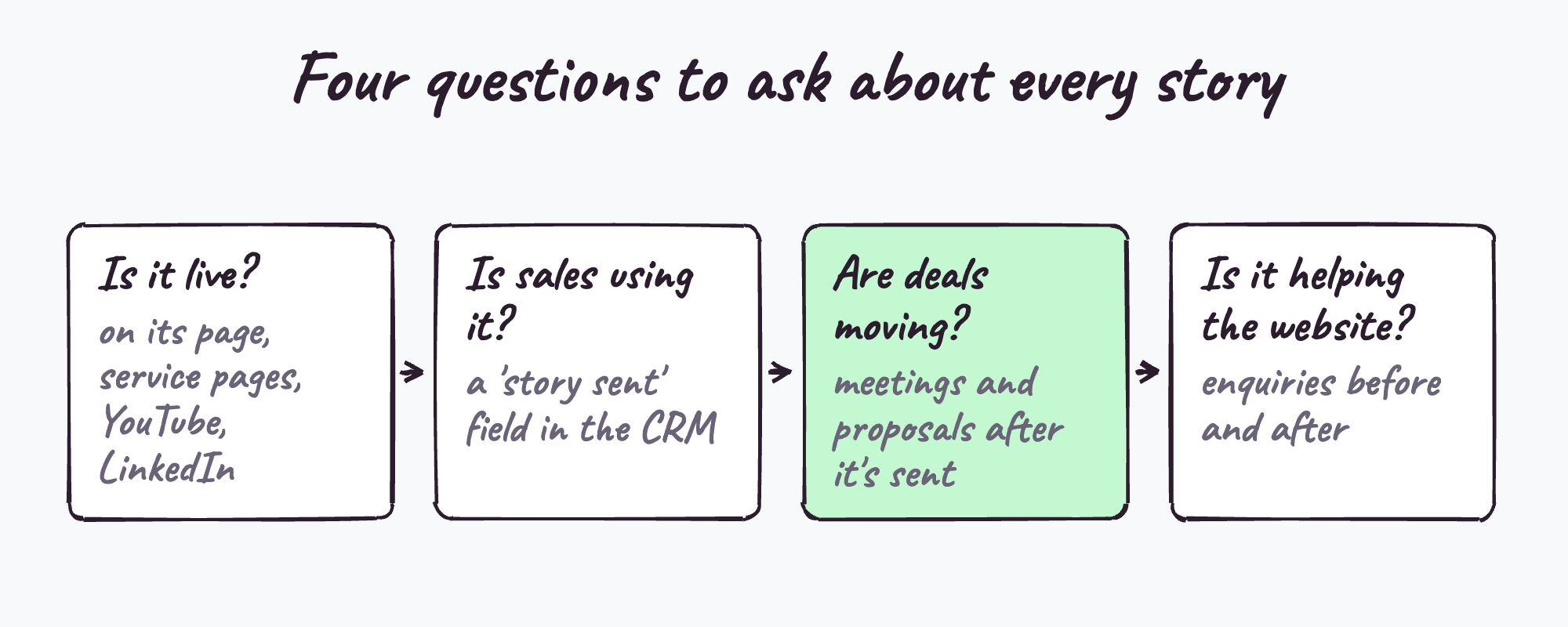
1. Is it live where it should be?
A story that isn't published can't work, and a surprising number aren't. So the first check is a list, per story:
- Is it on its own page on your website, with the film, the written story and the transcript?
- Is the right line on each service page it relates to, and on the page for the customer's sector?
- Is it on YouTube with a proper description?
- Has a named person shared it as a LinkedIn article?
- Did the customer leave a Google review the same week?
Each one is a yes or no. If most answers are no, you don't have a measurement problem, you have a publishing problem, and that's the cheapest thing on this page to fix. Where to put testimonials on your MSP website has the full list of places.
2. Is sales actually using it?
Add one field to your CRM: "story sent", with which story and when. Ask salespeople to fill it in when they send a clip, a case study or a quote in a live deal.
At the end of the quarter, look at how often each story was sent. A story nobody sends either doesn't fit the deals your team is working, or nobody knows it exists. Both are fixable, but you can't fix what you haven't noticed. There's more on the habit in how sales teams use a testimonial every week.
3. Are those deals moving?
Now look at what happened after a story was sent. Did the prospect reply? More importantly, did the conversation turn into a meeting, and did the meeting turn into a proposal?
A reply is nice. A meeting is the point, so if you only track one thing, track meetings. Over a couple of quarters you'll start to see which stories help at which stage: one that gets people to agree to a first call, another that gets a stalled proposal moving.
This won't be a scientific experiment, because deals where a story was sent differ from deals where it wasn't in all sorts of ways. It will tell you, quickly and cheaply, which stories your team should reach for.
4. Is it helping on the website?
For the pages where you've added a story, compare how many enquiries each page produced in the three months before and the three months after. Keep it modest: seasonality, campaigns and a dozen other things move those numbers too. If you have enough traffic, a proper split test on one important page is better.
What you're looking for is direction, not a precise figure. If the page with a named customer on it produces more enquiries than it used to, keep going. If nothing moves, check the story matches what that page's visitors actually want.
What to measure at each stage of a deal
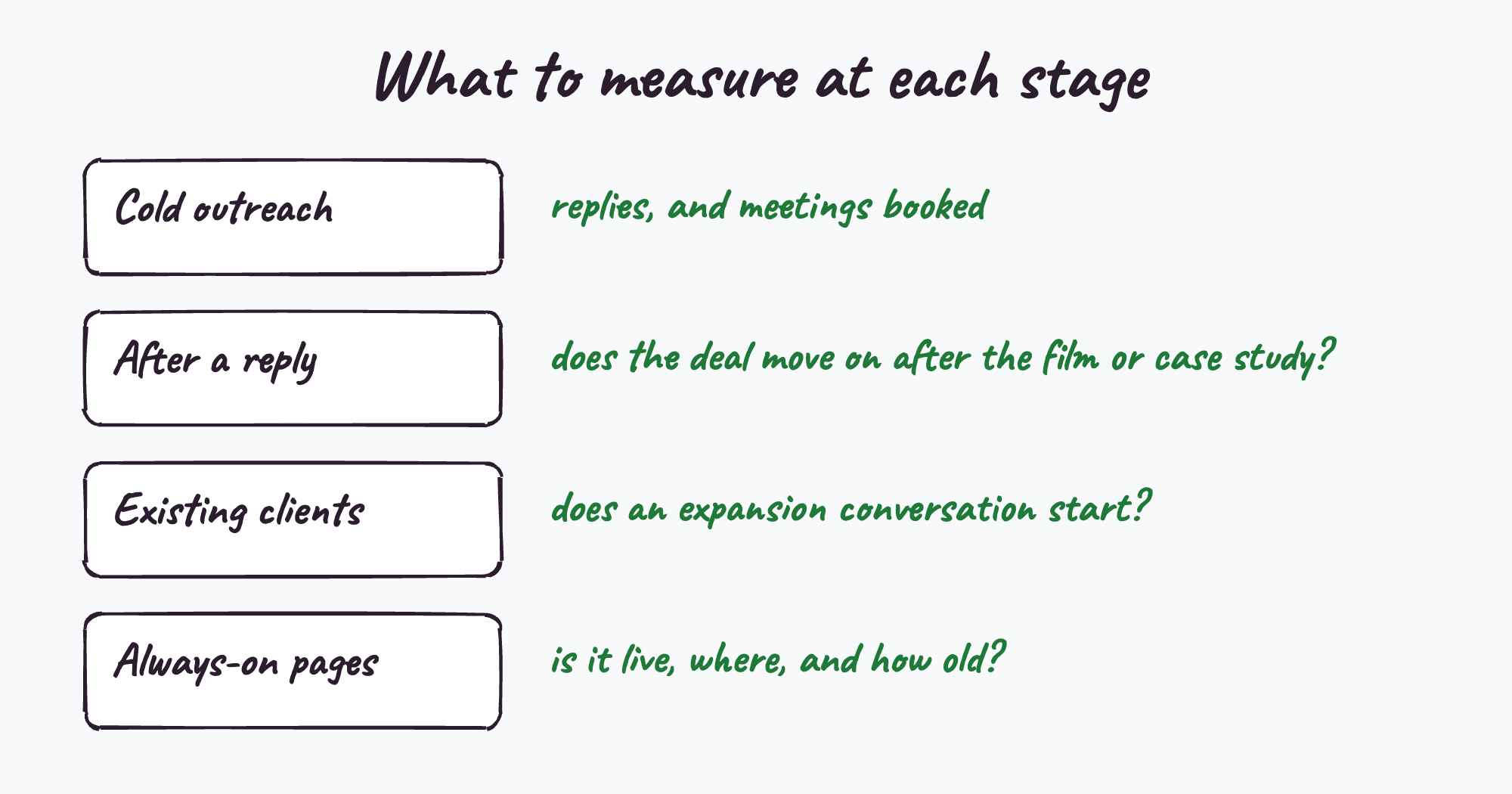
- Cold outreach: replies, and meetings booked. The story is a sentence at this stage, not an attachment.
- After a reply: whether the deal moves to the next stage after the film or case study is sent.
- Existing clients: whether an expansion conversation starts after a story is shared in an account review.
- Always-on pages: whether the story is live, where, and how old it is.
What about AI search?
Be wary of anyone selling you a precise AI visibility score for your testimonials. Ask the same AI tool the same question twice and you'll often see different sources cited, and nobody has run a controlled test of whether adding a testimonial to a page changes how often AI tools cite it. The practical checks are whether the story exists as a proper web page with the customer's name and details in the text, and whether it's linked from the pages it relates to. I've covered what's known in do testimonials help you get found in AI search?
A quarterly review in half an hour
Once a quarter, take each story and ask:
- Is it live everywhere it should be?
- How many times was it sent in a deal, and by whom?
- What happened in those deals?
- Is it still accurate: same person, same role, same services?
- Which gap in your coverage should the next story fill?
That last question is where measurement pays for itself, because it turns a vague sense that "testimonials are good" into a specific decision about who to interview next.
Questions people ask
What is the ROI of a video testimonial?
There's no reliable general figure. The practical way to judge it is to track the deals where a story was sent and see how they progressed, and to ask new clients what made them choose you.
What metrics should I track for testimonials?
Whether each story is published everywhere it should be, how often salespeople send it in deals, and whether those deals turn into meetings and signed work. Views and likes are secondary.
Should I A/B test testimonials on my website?
If an important page gets enough traffic, yes, a split test is the most reliable way to see whether a story helps that page. Otherwise, compare enquiries before and after, and treat the result as a direction rather than a precise number.
How long before a testimonial shows results?
It depends on your sales cycle. Publishing and sales use can be checked immediately; the effect on deals usually takes a full quarter or two to see.
Related reading
- How sales teams use a testimonial every week
- Why most MSP testimonials don't work
- How to run a customer story programme at scale
Every story we make arrives with the placement decided and a battlecard for sales, so it has a fair chance of being used.
See what's in the packJames interviews MSP and tech vendor customers for a living and runs MSP Testimonials, the interview-led testimonial service. If a customer of yours has a story worth telling, this is how it gets told.