How to run a customer story programme at scale
For vendor marketing and channel leaders. The difference between making a few partner stories a year and running a programme, and the parts that never get written down
 7 min read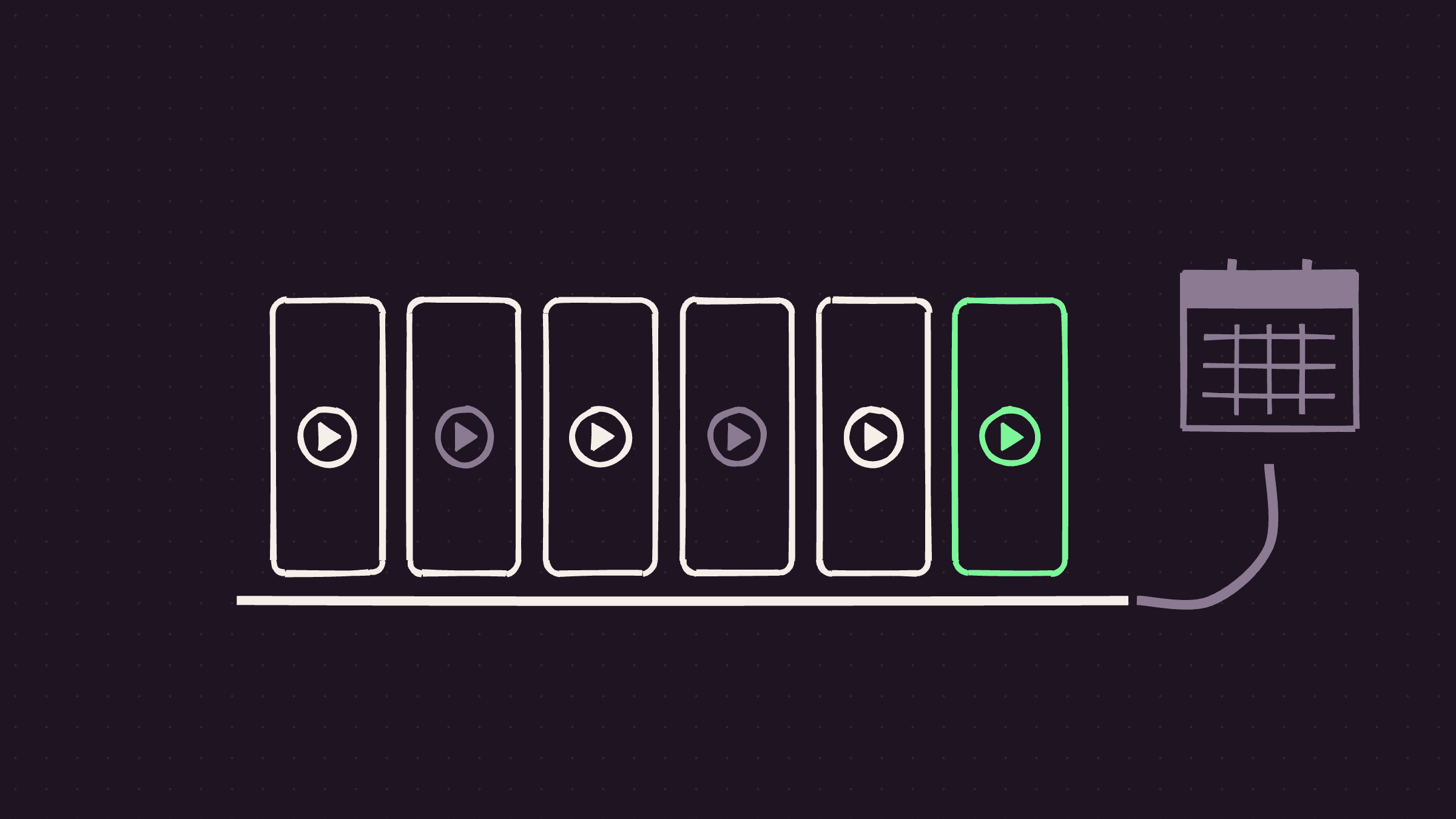
A customer story programme runs at scale when stories are commissioned on a fixed rhythm instead of one project at a time. That means a steady cadence such as one story a month, a source of nominations that fills itself, the same interview and the same pack every time, a library organised by the partners you want more of, and someone checking that stories get used in deals. The bottleneck is rarely production.
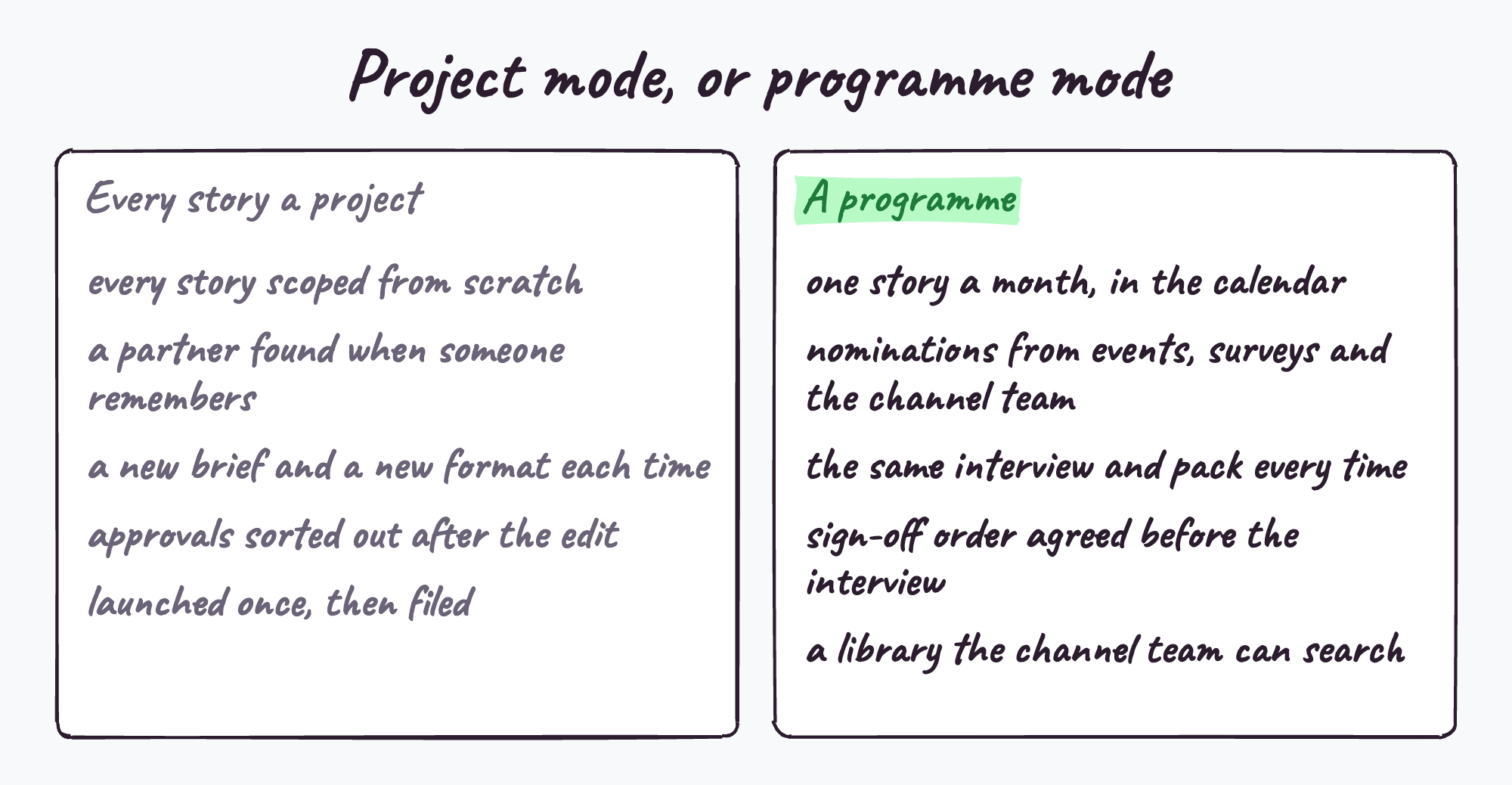
If you run marketing or the channel at a vendor that sells through MSPs, you probably know the pattern. Somebody decides you need more partner stories. A partner is found, eventually. Their legal team gets involved, the agency is briefed from scratch, the edit goes round three times, it launches with a LinkedIn post, and six months later you've got one story and a strong feeling that the next one will take just as long.
None of that is a production problem, and throwing a bigger budget at it doesn't fix it. The difference between vendors who have three partner stories and vendors who have thirty is that the second group stopped treating each story as a project.
1. Set a rhythm, not a target
"We want twelve case studies this year" is a target, and targets get met in a panic in November. "One story a month" is a rhythm, and rhythms get built into the calendar.
A monthly cadence also changes the economics of everything else. Nomination, interviewing, approvals and publishing stop being special events and become a routine somebody gets good at. It's why our larger packs release one story credit a month rather than all at once: the rhythm is the point.
If a year feels like too big a commitment, commit to a quarter. Three stories, one review at the end, and a decision about the next quarter based on what actually got used.
2. Build a nomination source that fills itself
The step that stalls most programmes is finding the next willing partner. The fix is to stop relying on someone remembering to ask.
Ask at events, not on dates. The best moments are when something has just gone well for the partner: a successful onboarding, their first big deal with your product, a quarterly business review where the numbers were good.
Ask your channel team one specific question. "Who's doing well with us?" gets you the same three names every time. "Which partner added a second product from us, and when?" gets you a story with a before, a decision and an after in it.
Use a short partner survey with one closing question. A handful of questions about how the partnership is going, ending with whether you can get in touch about telling their story. Anyone who says yes and leaves a specific comment goes on the list that week.
Let someone else do the asking. The vendor makes the introduction, and a third party handles the invitation, scheduling and chasing. It removes the awkwardness for both sides. When vendors tell us their customers would never agree, and we then approach those same customers on their behalf, the yes rate is over 80%.
3. Same interview, same pack, every time
A programme can't scope every story from scratch. Fix the format once: the same length of interview, the same shape of conversation, the same set of pieces at the end. Then the only thing that changes from story to story is the story.
For us that's a 45-minute remote interview following the same five phases every time (context, pain, decision, results and verdict), which I've written up in testimonial interview questions, and the same pack of films, sales material and written pieces at the end. A partner in Sweden and a partner in Texas get the same experience, and your team knows exactly what's arriving and when.
Fixing the format doesn't mean fixing the questions. The interview still has to follow the partner's story, and the follow-up questions are where it's won or lost.
4. Organise the library by who you're trying to convince
This is the step most vendors skip, and it's why a library of twenty stories can still leave the channel team without the right one.
Sector is the obvious way to organise customer stories and it's nearly useless for a vendor, because every one of your partners is, in some sense, an IT company. The categories that matter are the ones your recruiting and enablement conversations turn on:
- Partner size: a two-person MSP doesn't believe a story from a 300-person one.
- Region: partners want to hear from someone who sells into the same market.
- What the partner does with you: uses your product to run their business, resells it to their clients, or has just joined.
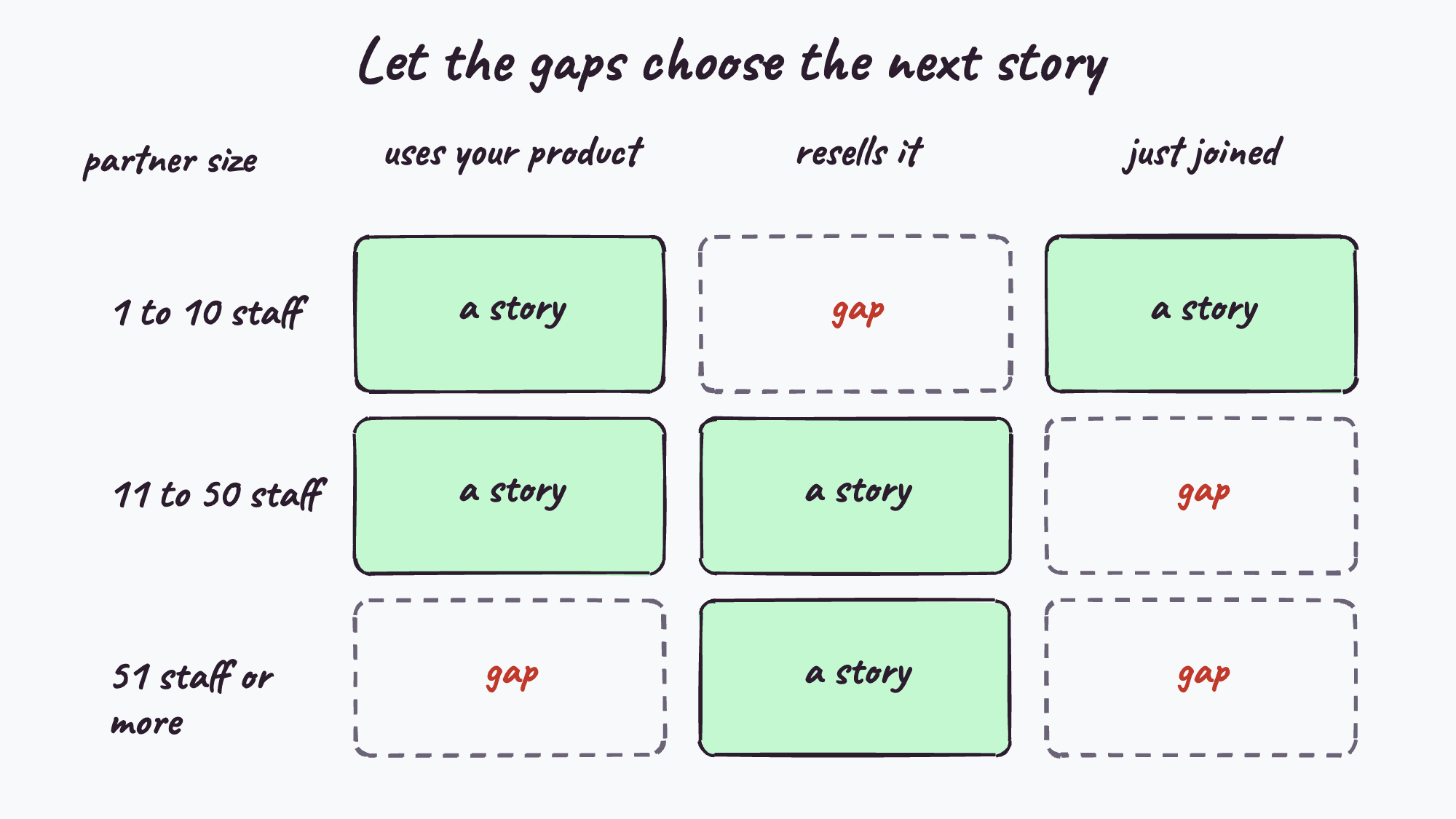
Lay those out as a grid and the gaps become obvious. Then commission the next story to fill a gap, rather than going with whichever partner happened to say yes.
Two sorting rules help. The service or product a story covers decides where it's used (which page, which campaign). The type of partner decides who it convinces. Keep them as separate tags, because a story can cover three products but only ever represent one kind of partner.
5. Sort out approvals before the interview, not after
Approval delays are where programmes quietly die. A few habits prevent most of them.
Agree the sign-off order up front. In our process, you approve the pack first, then the partner approves their own story. Five working days is a sensible guide for each.
Raise client mentions early. Partners often want to talk about their own customers, which is great for the story and complicated for approvals. Ask before the interview whether they're comfortable naming a client, describing one, or only talking about a sector, so nobody has to unpick it from the edit.
Keep the partner's words exactly as they said them. Approvals go faster when nobody is being asked to sign off a sentence they never said.
6. Publish where prospects and partners will find it
A story sitting in a partner portal behind a login can't recruit anyone. Keep the main version public: a story page on your own site with the film, the written story and the transcript, plus the relevant lines on your partner recruitment page and product pages.
That matters for search too. G2's 2026 research found 51% of B2B software buyers now start their research with an AI chatbot more often than with Google, and those tools read public web pages, not gated PDFs. There's more on that in do testimonials help you get found in AI search?
The portal is still a good home for co-branded versions and enablement material partners can use with their own clients.
7. Arm both sales forces
A vendor's customer stories have two sets of salespeople to serve. Your own channel team uses them to recruit and grow partners. Your partners' salespeople use them to sell your product onward, often with three other products competing for their attention and no particular reason to champion yours.
Each needs different material. Your channel managers need the story in thirty seconds and the objection it answers. Partners need something they can forward to their own prospects without having to explain it. And both need the same rule about timing: with a cold prospect, a story is a sentence, not an attachment. I've covered that in how sales teams use a testimonial every week, and why partner proof works differently in how channel vendors use MSP partner stories.
8. Measure whether stories get used
Views tell you very little. The questions worth asking every quarter are simpler and more useful:
- Is each story published everywhere it should be?
- Which stories were sent in live deals or recruitment conversations, and by whom?
- Did those conversations turn into meetings? (A reply is nice; a meeting is the point.)
- Where are the gaps in the library, and does next quarter's plan fill them?
Honestly, very few teams measure this well, and it doesn't need to be sophisticated. A field in the CRM for "story sent" and a thirty-minute review each quarter will tell you more than any dashboard of video views.
When isn't a programme the right shape?
If you only have a handful of partners willing to go on record, do those few well before building a system around them. And if what you need is a single flagship story for a launch, commission that and see how it gets used. A programme earns its keep when you need to cover several partner types and regions, and when your channel team is regularly asking for "a story like this one, but for a partner like that one".
Questions people ask
How many customer stories does a channel vendor need?
Enough to cover the types of partner you're trying to recruit and grow, across size, region and what they do with you. Start with a quarter of three stories, see which gets used, and let the gaps decide the next quarter.
Who should own a customer story programme?
One named person with a monthly number to hit. When it belongs to a whole team it tends to stall; when it belongs to someone whose week visibly includes it, it happens.
Should partner case studies be gated?
Keep the main version public so prospective partners, search engines and AI tools can find it. Use the partner portal for co-branded and enablement versions.
Can one interview cover several products?
Yes. Interview for the story, then tag every product or service it covers, so the same interview can supply material for several product pages and campaigns.
Related reading
- How channel vendors use MSP partner stories
- Which client should you ask for a testimonial?
- How sales teams use a testimonial every week
Our 12 and 24 story packs are built for vendors covering several partner segments, one story a month, the same interview and pack every time.
See the pricingJames interviews MSP and tech vendor customers for a living and runs MSP Testimonials, the interview-led testimonial service. If a customer of yours has a story worth telling, this is how it gets told.