What you get from one testimonial interview
All 48 pieces, what each one is for, and who on your team should pick it up
 7 min read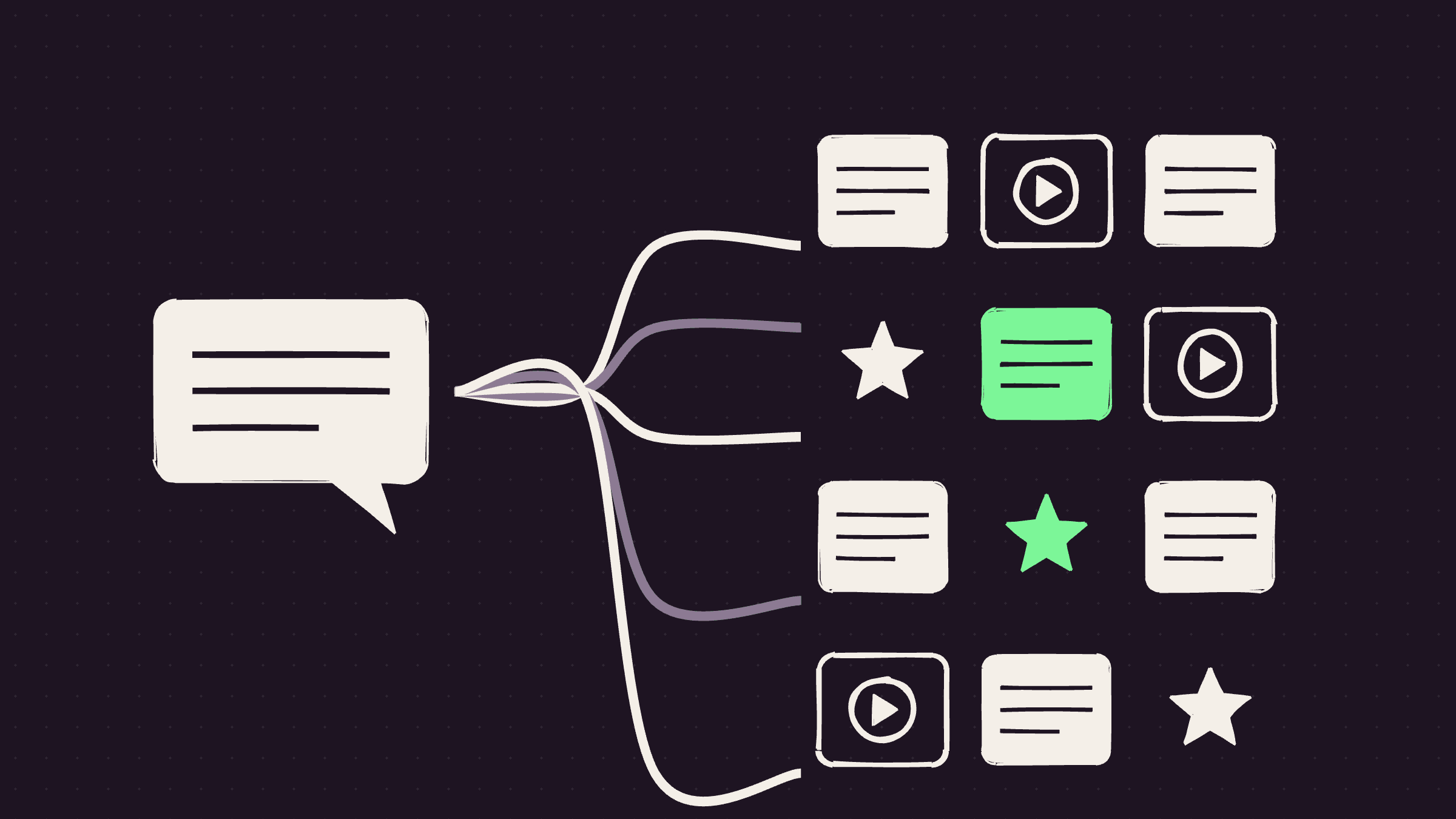
One MSP Testimonials interview produces 48 pieces: a full film of up to four minutes, a teaser, five shorts, six quote cards, three YouTube thumbnails, two email signature banners, a sales battlecard, a case study, a one-page sales guide, eleven ready-to-post social posts, four emails, a landing page, a blog post, an AI search kit, two pieces for your customer to share, a Start Here guide, a walkthrough video and the transcripts.
That's the list, and I'll admit a list of 48 things is precisely the sort of thing that makes a marketing manager's heart sink. More stuff is not the point. Most businesses that buy a testimonial already have more content than they use, so the useful question isn't what arrives, it's what each piece is for and who is supposed to pick it up on a Tuesday.
So this goes through the pack by job rather than by file type, with pages from real packs along the way, because it's much easier to see what a piece is for when you can see the piece.
What films come out of one interview?
Three kinds, and each has a different job.
The full version runs up to about four minutes, in 16:9, delivered at 1080p and 4K. It's the whole story told properly, from how things were before to what the customer would say to a peer who's on the fence. This is the one for your case study page and for the prospect who has asked to see proof.
The teaser is six to eight of the best lines, cut hard, for a feed. It's there to make someone curious enough to watch the full one.
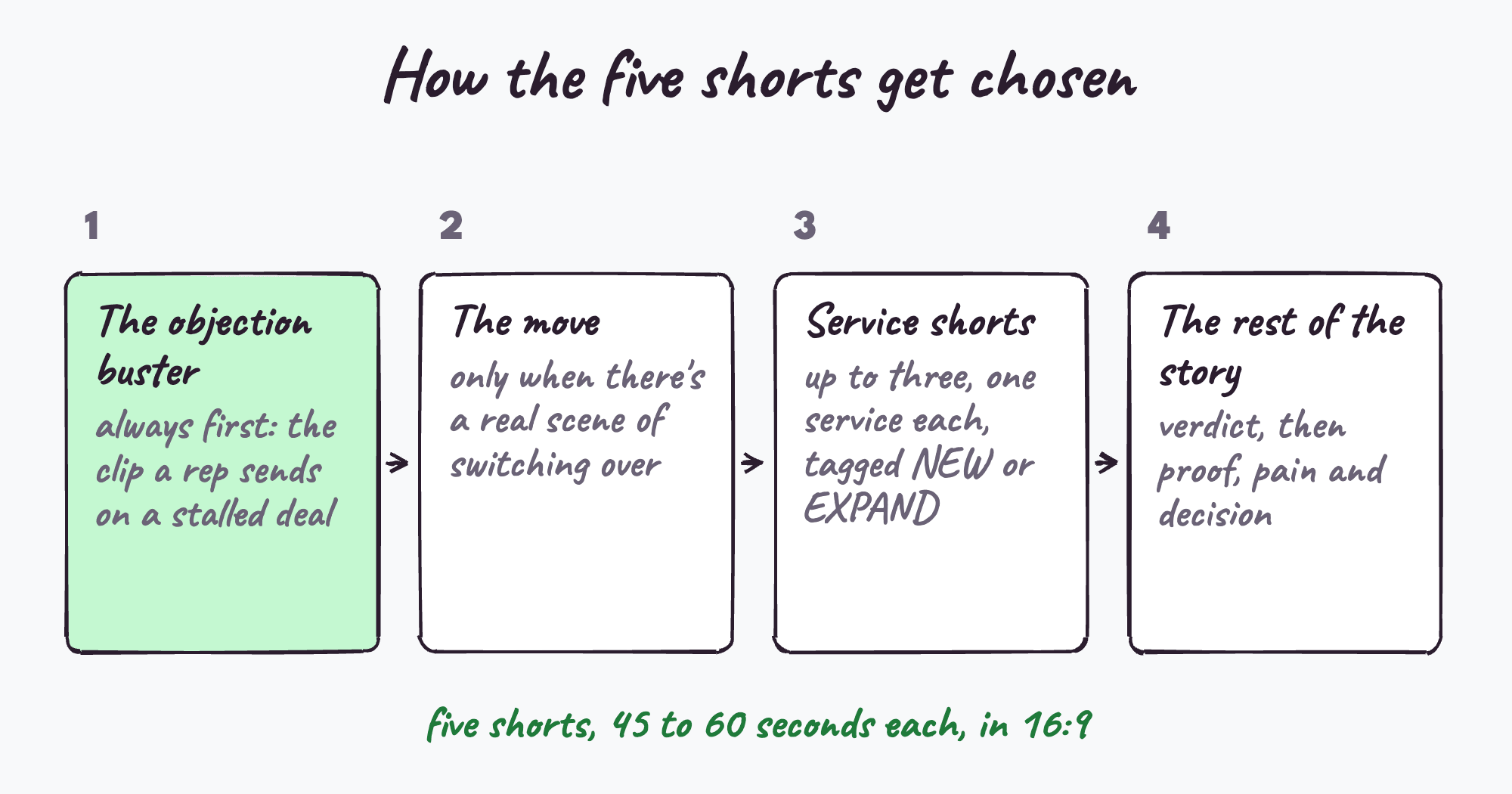
Five shorts of 45 to 60 seconds each, every one about a single topic. These are chosen for your sales team first and your social feed second, in a fixed order:
- The objection buster, always first. The clip a salesperson reaches for when a prospect raises the thing that stalls deals.
- A short about the move itself, but only when the customer gave us a real scene of switching over.
- Up to three service shorts, each one the customer talking about one specific service you sell, with a moment or a number in it rather than a vague mention.
- The rest of the story, filled in the order verdict, proof, pain and decision.
A service short gets tagged for whether the customer bought that service when they joined or added it later, because the first sits on your service page for new prospects and the second goes to your existing customers.
What does the sales team get?
This is the part of the pack I care about most, because marketing uses a story once and a seller uses it every week.
The sales battlecard leads the pack. It's three pages, internal only, and it has the story in thirty seconds, the objections this customer's story answers, fifteen verbatim quotes sorted by when a rep would use them, and short email snippets they can paste. It is built for someone with a prospect on the other end of the phone.
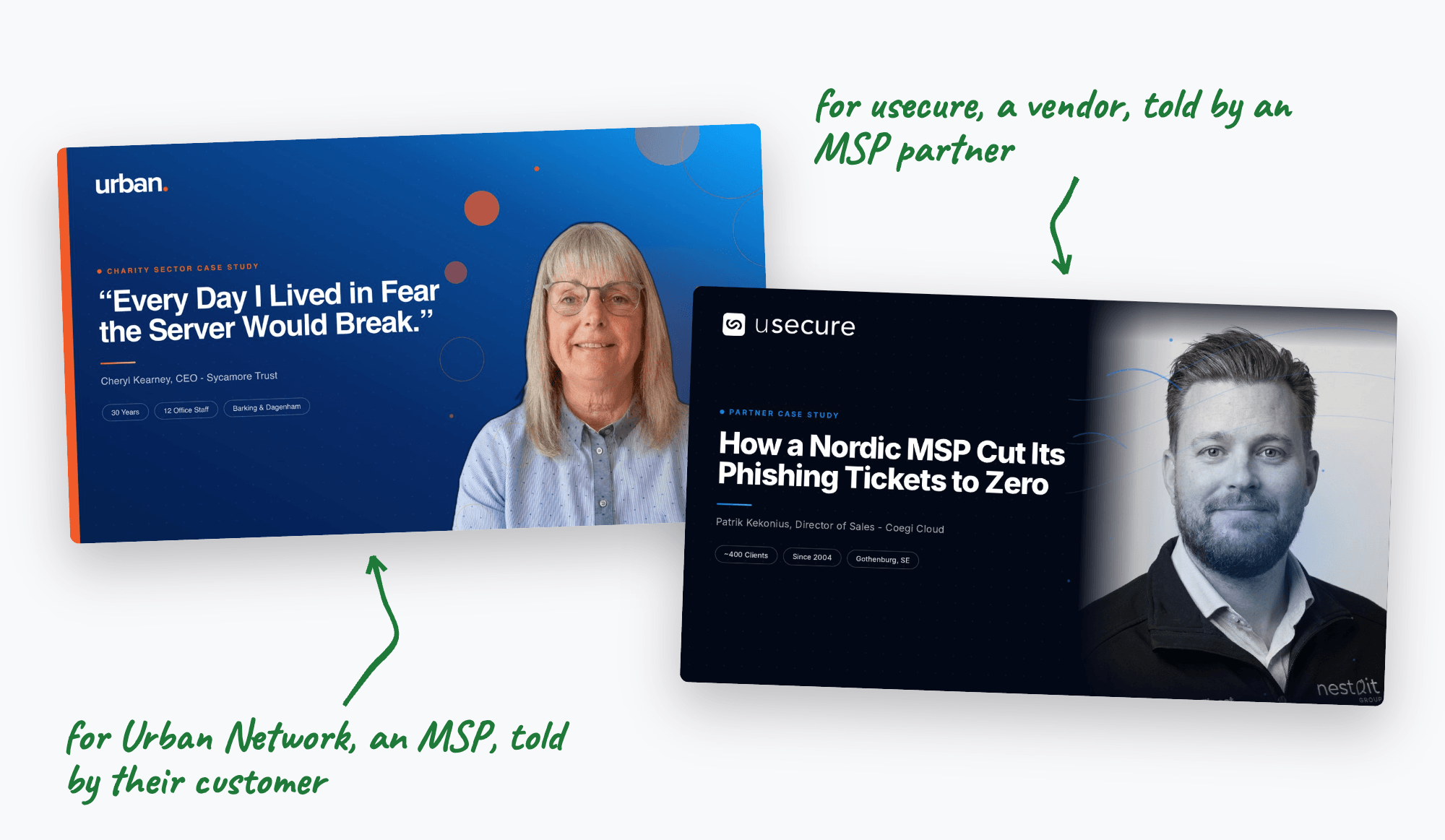
The case study is eight pages in your brand, as a PDF and as HTML, for the buyer who wants to read the detail before a second meeting.
The one-page sales guide is safe to forward. It's the thing a rep attaches when the prospect says "can you send me something I can show my boss?"
What does marketing get?
The posting sheet is a spreadsheet with eleven posts ready to go: six that sit alongside the quote cards and five that go with the shorts. Every row has the copy, a preview, a link to the file, and a note on what that post is trying to prove and which kind of prospect it's for. That last column is the one people don't expect, and it's what stops the posts all saying "great to work with".
Six square quote cards, three YouTube thumbnails and two email signature banners, delivered as Canva template links so your team can adjust them later without asking anyone.
The YouTube copy: title, description, tags, a pinned comment, captions and the details for each short.
A landing page and four emails: one for a salesperson to send a prospect, one for your newsletter, a short update, and a partner announcement.
A blog post for your website, with a short FAQ, plus a LinkedIn article version under a named person.
An AI search kit for whoever runs your website, with the schema code and a short set of instructions for getting the written story onto the pages and platforms that AI answers actually read from. I've written separately about what testimonials can and can't do for AI search, because it's an area full of people selling things that don't work.
What does your customer get?
Two things of their own, which matters more than it sounds. A short website piece about their outcome, written for their own site with you as the company that did the work, and a LinkedIn post in their voice, ready to paste, to share the film.
People are far happier to say yes, and far more likely to share the result, when they come out of it with something that makes them look good too.
How does it all arrive?
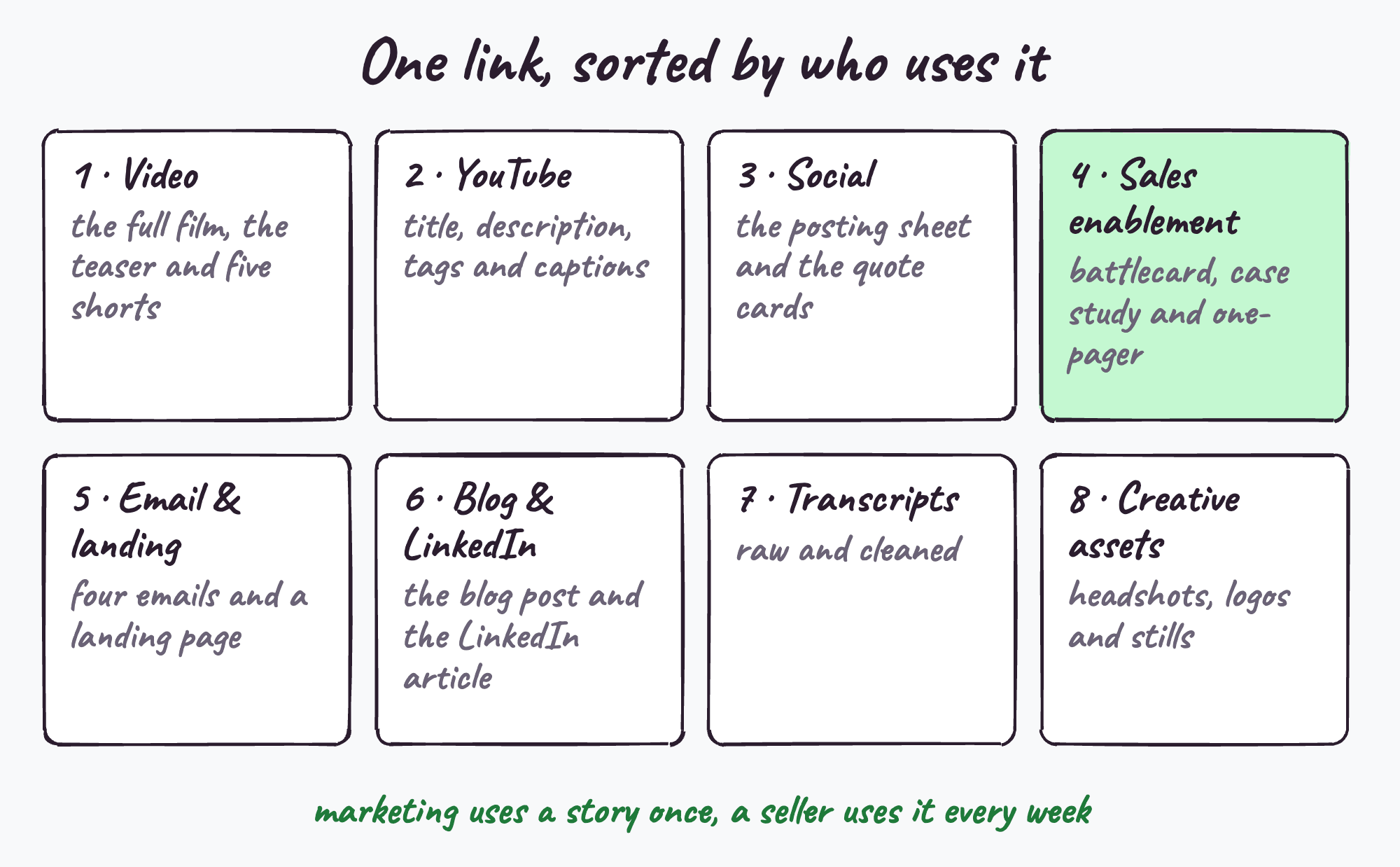
In one Google Drive folder, sorted by job: video, YouTube, social, sales enablement, email and landing page, blog and LinkedIn, transcripts and creative assets. At the top sits Start Here, a short guide that tells your team what to do first, second and third, and a walkthrough video from me talking you through the pack.
You also get the transcripts, raw and cleaned, so anyone who wants to write something new from the interview later can, and a creative assets folder with the headshots, logos and stills we used.
The pack lands 14 working days after the interview, and nothing goes live until you and your customer have both signed it off.
Why so many pieces?
Because a story has to live in more places than a single film can reach. A buyer researching you meets it on a service page, a salesperson needs it in a follow-up email, an account manager wants it at a quarterly review, and a partner needs something to forward. Each of those is a different format.
The honest caveat is that the number only matters if the pieces get used, which is why the Start Here guide exists and why it's short. If you do three things from it in the first week, you'll have got more from one story than most businesses get from a whole year of them.
Questions people ask
How long is a testimonial video?
The full version runs up to about four minutes. There's also a teaser of six to eight lines and five shorts of 45 to 60 seconds each.
Are the shorts vertical?
The shorts are delivered in 16:9, because the places a salesperson uses them (email, proposals, your service pages, LinkedIn) are horizontal. A 9:16 version of each is available if you post to Reels or similar.
Can we edit the graphics ourselves?
Yes. The quote cards, thumbnails and banners come as Canva template links, so you can duplicate them into your own Canva account and change them whenever you like.
Do we own the testimonial content?
You get a perpetual licence to use every delivered piece in your own marketing. We may show the work in our own portfolio unless you tell us in writing not to.
Is anything in the pack written by AI?
Every quote is taken word for word from the recording, and nothing your customer says is invented or rewritten in their voice. We use software to help structure and format the written pieces, and every one is checked against the transcript before it ships. The parts that decide whether the story is any good are all done by people: I write the questions and run the interview, I choose the moments and write the edit notes, a human editor cuts the film, and people review it before you see it. None of that is automated.
Related reading
- How much does a video testimonial cost?
- How sales teams use a testimonial every week
- Where to put testimonials on your MSP website
One customer, one conversation, and all 48 pieces back in 14 working days, sorted by who uses them.
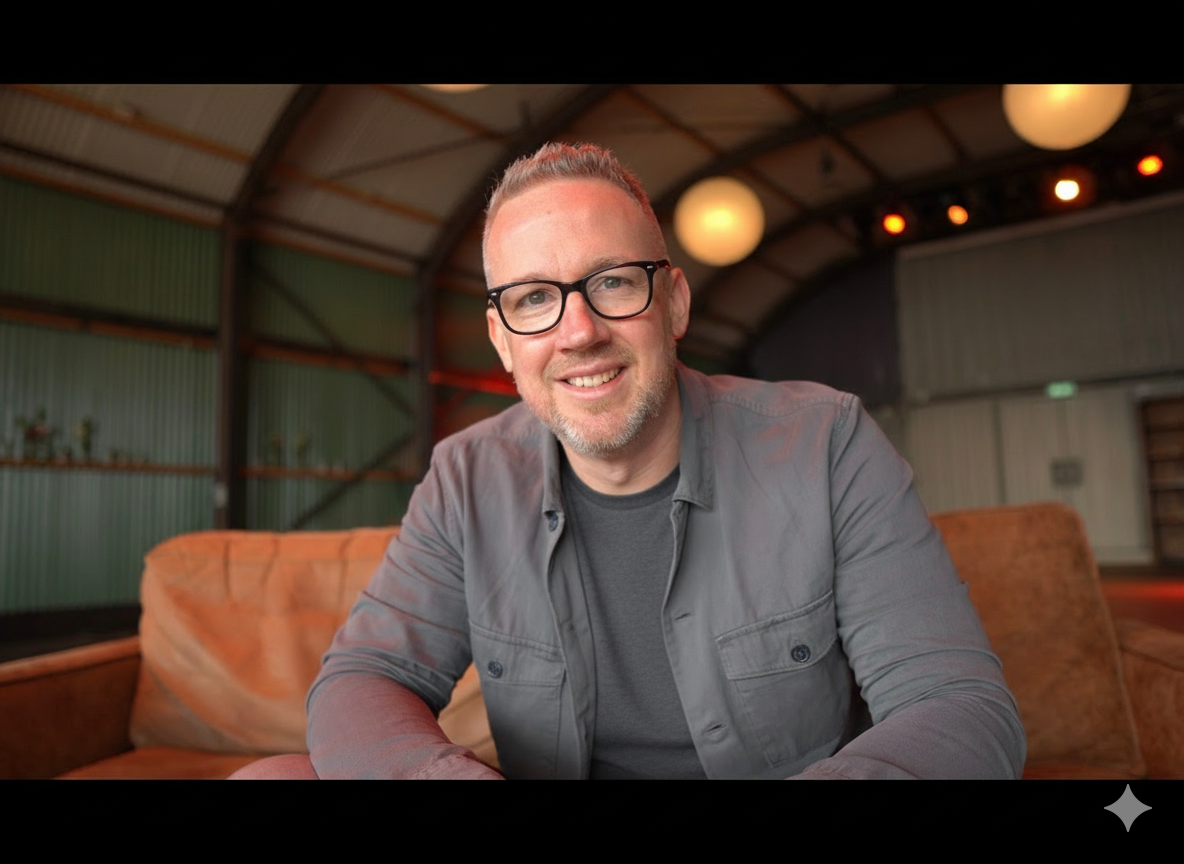
See how it worksJames interviews MSP and tech vendor customers for a living and runs MSP Testimonials, the interview-led testimonial service. If a customer of yours has a story worth telling, this is how it gets told.