How a remote video testimonial works, from booking to handover
Every step, who does it, how long it takes, and what your customer actually has to do
 7 min read
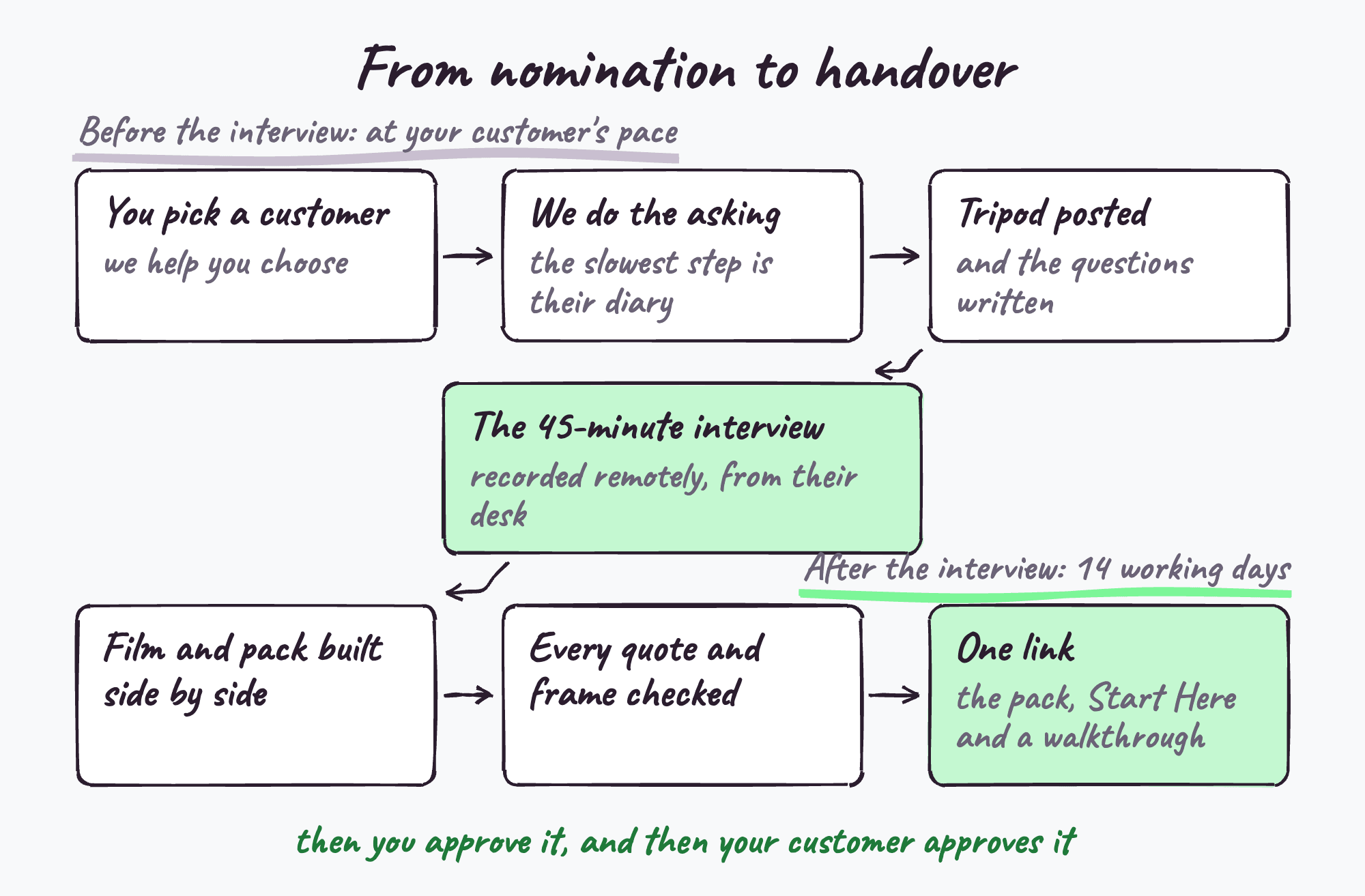
A remote video testimonial works like this: you nominate a happy customer, we invite and book them, they join a 45-minute recorded video call with me from their own desk using their phone on a small tripod we post to them, and the finished pack lands 14 working days after the interview. Nothing is published until you and your customer have both approved it.
That's the whole thing in a sentence. The reason it's worth a longer answer is that the part people worry about is almost never the part that goes wrong. Clients worry about their customer freezing on camera, which is understandable and rarely what happens, because once someone realises it's a conversation about their own business rather than a performance, they talk. What actually slows a project down is getting a date in somebody's diary, and that's a much easier problem to plan for once you know it's coming.
Here is every step, who does it, and roughly how long it takes.
Step 1: You pick a customer
You tell us who. If you're not sure, we help you choose, and the best candidates are nearly always the obvious ones: a customer who switched to you from someone else, who has been with you long enough to have seen you handle something difficult, and who you'd be happy for your best prospect to phone.
It's worth thinking about who the story is for before you think about who's in it. A testimonial exists to win more customers who look like the one on camera, so if you want more accounting practices, a 40-person accounting practice is worth three times a household name from a sector you don't sell to.
If you're struggling for names, I wrote a piece on five ways to get testimonials from your clients that starts with the praise already sitting in your ticket queue.
Step 2: We do the asking
You make a short introduction, and from there we take over. I email your customer, explain what's involved in plain terms, share the questions in advance if they'd like to see them, and send a link to book a time that suits them. You don't have to write the awkward email or do the chasing.
We call it a customer story rather than a testimonial when we ask, because it is one, and because people are much more comfortable telling a story about something they did than being asked to endorse a supplier.
Step 3: We get them ready
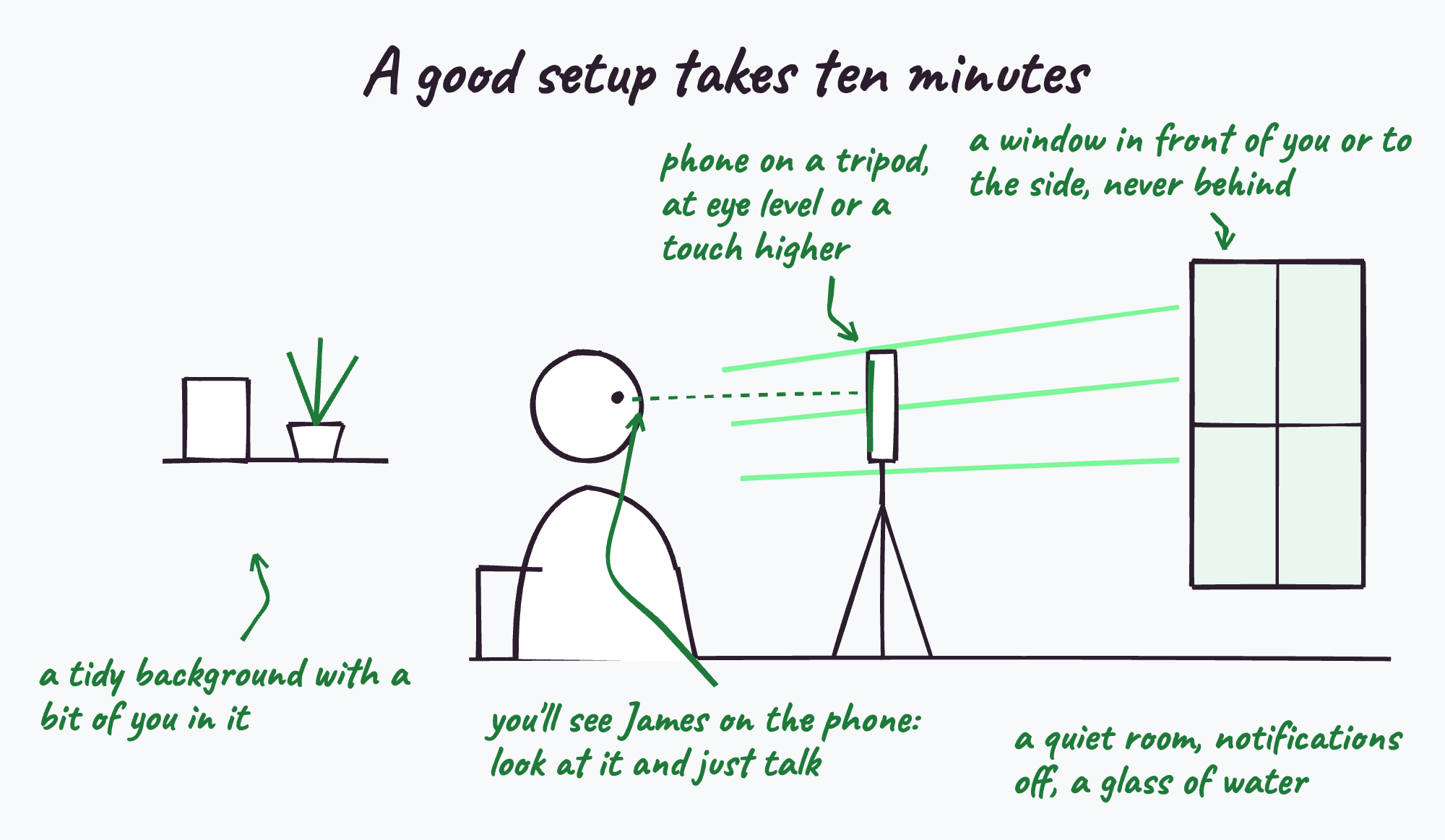
Once they've booked, a few things happen in the background. We post them a small tripod so their phone sits steady at eye level. When I confirm the booking I ask for a quick photo of where they'll be sitting, which lets me spot a bright window behind them or a camera pointing up somebody's nose a week before it matters. And I research their company and yours, then write the questions for that specific conversation.
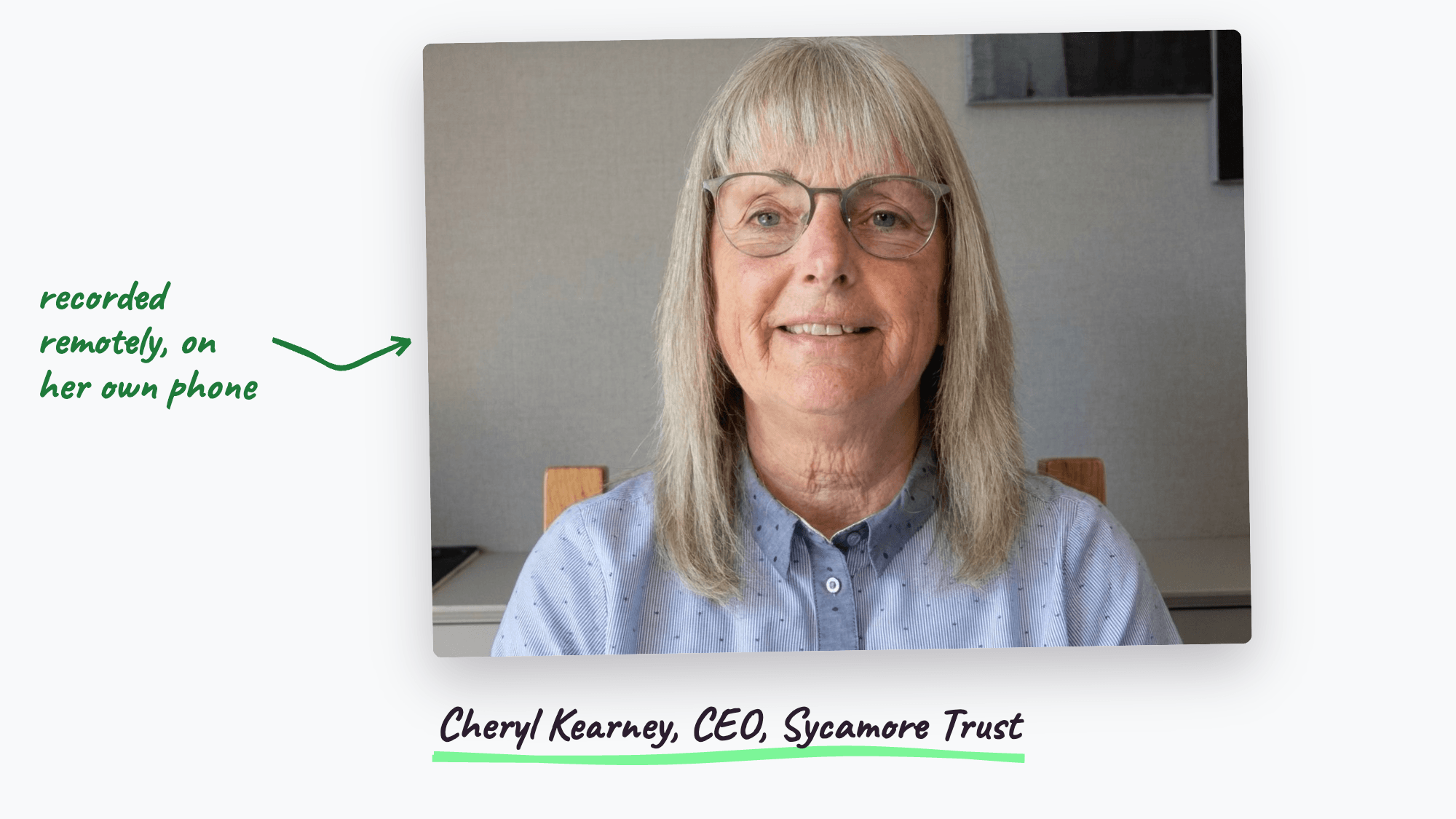
About an hour before the call, they get a short email with the joining link and a handful of tips: sit facing a window rather than with one behind you, put the phone on the tripod at eye level, choose a tidy background that says a little about them, and then look at the phone and just talk, because it's a conversation. The whole interview happens on their phone in the Riverside app, so there's no laptop involved. If you want to share it with your customer ahead of time, the full list is in how to be good on camera in a testimonial.
Step 4: The interview
Your customer joins a video call with me from wherever they work. The recording happens through Riverside on their own phone, which captures their video and audio locally at high quality rather than relying on the internet connection, so a wobbly broadband line doesn't ruin the picture.
It takes 45 minutes. I guide the whole thing, so there's nothing to prepare and nothing to memorise, and because it's recorded rather than live, anything said by mistake gets cut. If they stumble, they pause and go again. Nobody is ever asked to share anything confidential.
The conversation follows the story rather than a list: what the business does, what it was like before, why they made a change when they did, what's different now, and what they'd tell a peer who was weighing it up. Most of my job in that 45 minutes is hearing the moment that matters (the Monday nobody could log in, the first holiday without work email) and asking to hear more about it, which is the difference between a testimonial that sounds nice and one that convinces somebody. I've written up the questions I ask and why.
Step 5: The film and the pack get built
After the interview I cut the story down myself and write detailed notes for the editor, marking every line and every on-screen moment. The editor, a person, cuts the full film, the teaser and the five shorts from those notes. It's worth saying plainly, because plenty of services now automate some of this: the questions, the interview, choosing the moments, the edit notes, the editing and the review are all done by hand, by people. No part of that is automated.
At the same time, and this is why the whole thing fits in 14 working days, the written pack is built from the transcript: the battlecard, the case study, the sales guide, the posts, the emails, the blog post and the rest. Graphics follow once the copy is set. Everything then goes through two quality checks, one on the film and one on the graphics and documents, including a check that every quote matches the recording word for word.
Step 6: Handover
Fourteen working days after the interview, you get one link. It opens a Google Drive folder with the whole pack sorted by job, a short Start Here guide telling your team what to do first, and a walkthrough video from me going through it. There's more detail on each piece in what you get from one testimonial interview.
Step 7: You approve it, then your customer does
You review the pack and tell us anything you want changed, as specifically as you like, with timecodes or file names. Once you're happy, we take it to your customer for their own sign-off. Five working days is a sensible guide for each of those reviews, although it moves at whatever pace you and your customer need.
Nothing goes live until both of you have approved it, and revisions aren't rationed.
What if my customer can't be named?
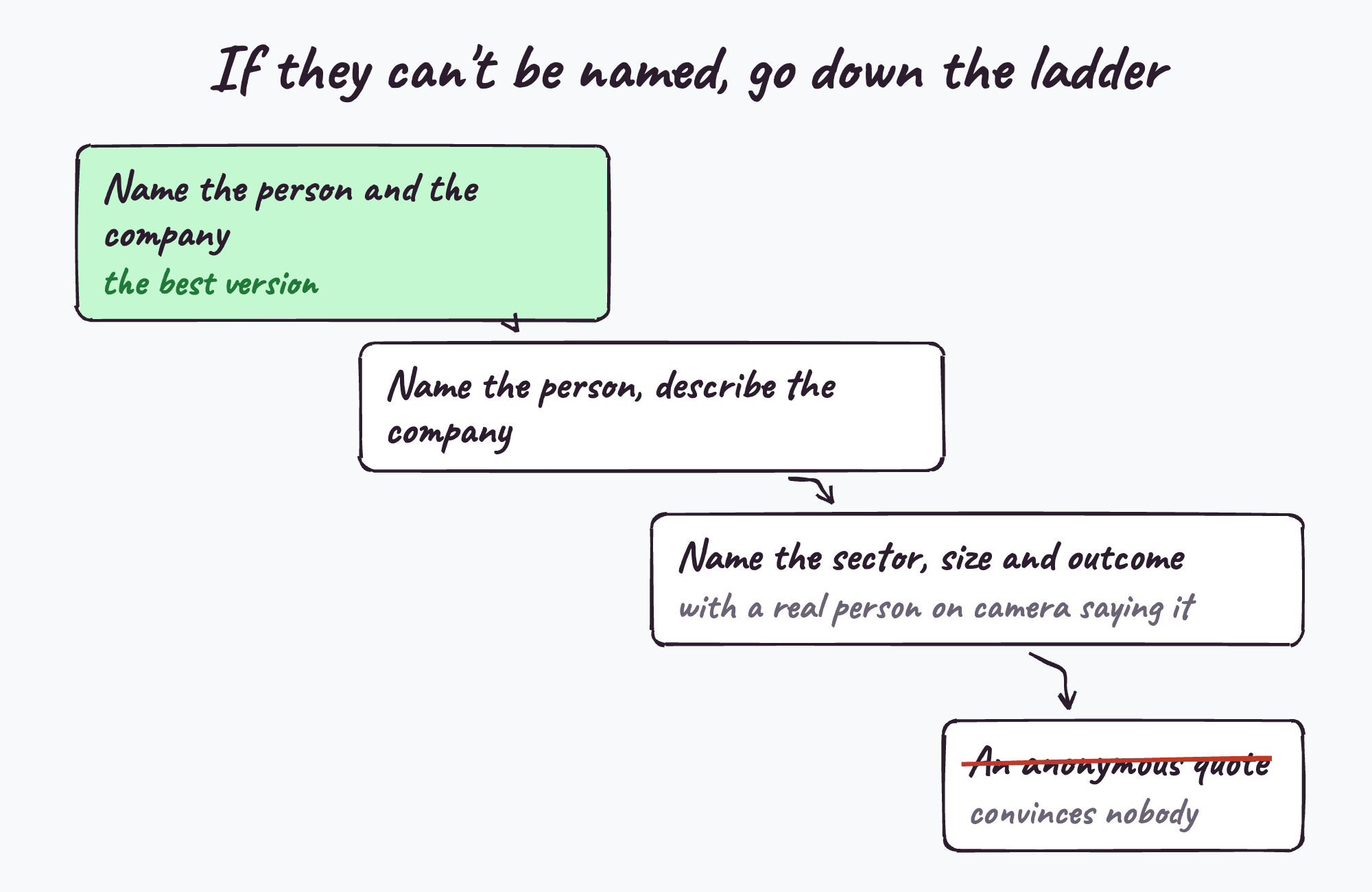
This is the question I hear most from MSPs, and it has a better answer than an anonymous quote. Some customers genuinely can't be named, usually in legal, defence and finance, or when a business is mid-acquisition. More often, nobody has actually asked, and the name got removed later as a precaution.
So we ask in order. First, can we name the person and the company? If not, can we name the person and describe the company? If not, can we name the sector, the size and the specific outcome, with a real person on camera saying it? Even the third version beats an anonymous line of text, because a real person describing a real result is evidence whoever employs them.
What if my customer changes their mind?
Before the interview, it costs you nothing: we find someone else. After the interview, your customer still approves their own story before anything is published, and if they withhold approval we work with you to find an alternative, although the credit counts as used once the recording has happened. In practice this is rare, because people who agree to a 45-minute conversation about a supplier they like generally like the result.
Questions people ask
How long does a video testimonial take to make?
The full pack is delivered 14 working days after the interview. The time before the interview depends mostly on how quickly your customer books a slot.
How much of my customer's time does it take?
About an hour in total: the 45-minute interview, plus a few minutes to book and set up the phone and tripod.
Does my customer need any equipment?
A reasonably modern smartphone, a quiet room with some natural light, and the small tripod we post to them. The recording runs through the Riverside app on their phone.
Can the interview be done in person?
No. Every MSP Testimonials interview is recorded remotely, which is what keeps the price where it is and means your customer never has a crew in their office.
Who owns the finished testimonial?
You receive a perpetual licence to use every delivered piece in your own marketing. We may reference the work in our own portfolio unless you tell us in writing not to.
Related reading
- What if my client says no to a testimonial?
- How much does a video testimonial cost?
- Testimonial interview questions for MSPs
You pick the customer, we handle everything else. The pack arrives 14 working days after the interview.
See the pricingJames interviews MSP and tech vendor customers for a living and runs MSP Testimonials, the interview-led testimonial service. If a customer of yours has a story worth telling, this is how it gets told.