What if my client says no to a testimonial?
The real reasons behind a no, which of them you can fix, and the ones you should simply accept
 7 min read
When a client says no to a testimonial, they are usually refusing the way they were asked rather than the idea. The common reasons are that it sounded like work, they didn't know what they would say, they are nervous on camera, they worry about being named, or the timing was wrong. Each has a fix, and the no that can't be fixed is still useful information.
The customers who do say yes almost always say it for the same reason, which is that they like the business and want it to do well, and that motive doesn't vanish in the ones who said no. So when an MSP owner tells me their clients "don't do testimonials", what I usually hear is that the clients were asked once, in a way that made it sound like homework, and the no got filed as a permanent answer.
Here are the reasons behind a no, in roughly the order I come across them, and what to do about each.
Reason 1: It sounded like work
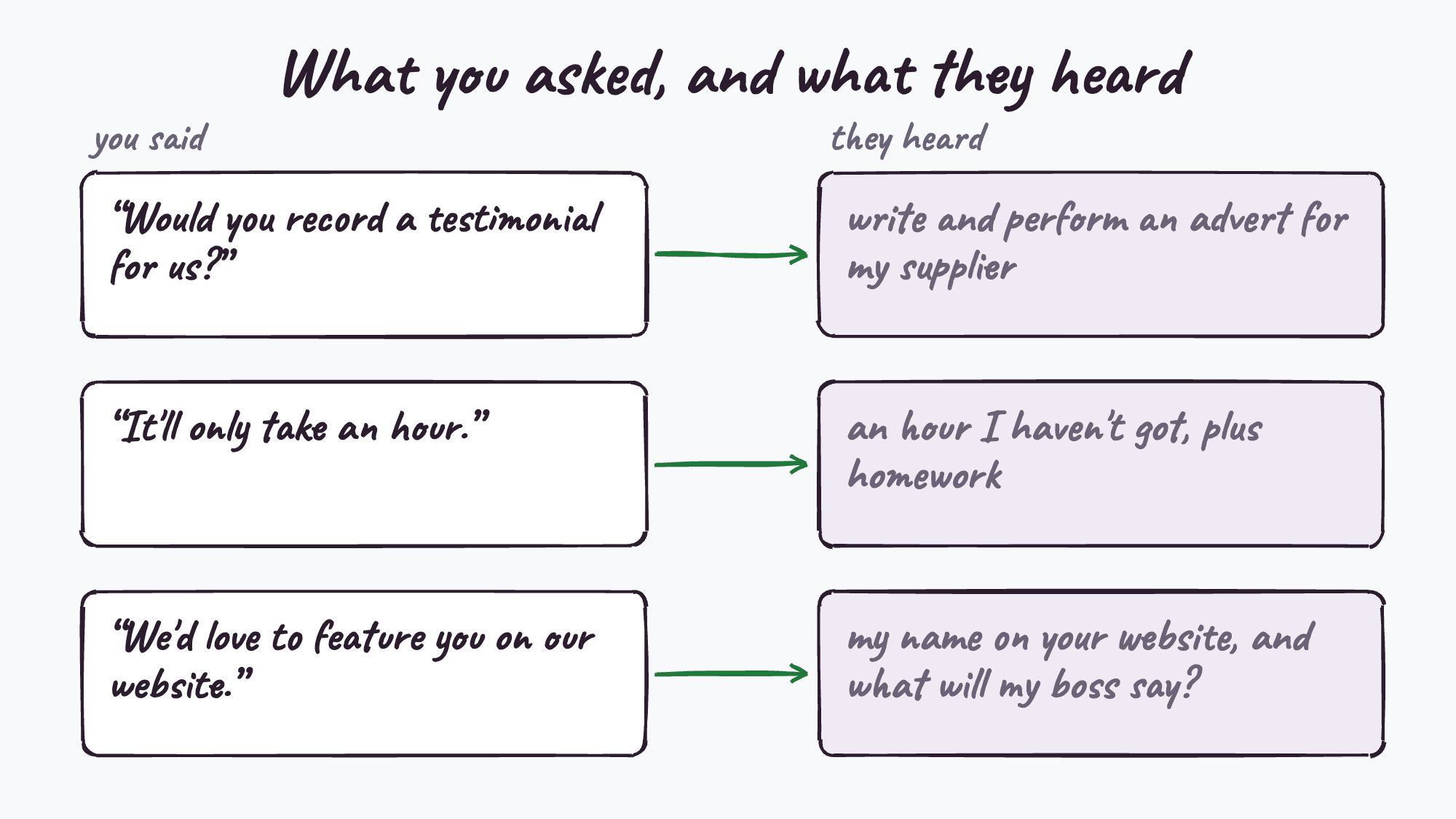
"Would you be up for recording a testimonial?" sounds like a small ask to the person sending it. To the person receiving it, it's an open creative brief with no brief attached. They have to work out what to say, how to film it, where to send it and whether it's any good, and all of that for a supplier.
The fix is to describe the actual thing. A relaxed video call where someone asks them questions about how things were before and what's changed since. Say how long it takes. Offer to send the questions in advance. Make it clear there's nothing to prepare and nothing to memorise, and that they'll see and approve it before anything goes out.
We call it a customer story when we ask, and that isn't just a nicer word. People are comfortable telling a story about a decision they made. They're much less comfortable being asked to endorse a supplier.
Reason 2: They didn't know what they'd say
This is the one behind most polite silences. A good client who genuinely likes you gets asked, freezes because they can't think of anything clever, feels bad about freezing, and stops replying.
The fix is to show them their own words. Somewhere in your ticket system there's a reply from that client that says something like "honestly, I don't know what we'd do without you". Lead with it: you said this back in March when we got the server back up, would you be happy talking about that on a call? Confirming something you already said is a far smaller act than inventing something new.
The same applies to chasing. If a request has gone quiet, sending the same email again is the same blank sheet arriving twice. Change the shape of the ask before you change how often you send it. I wrote more about finding those words in five ways to get testimonials from your clients.
Reason 3: "I'm not good on camera"
Lots of people believe this about themselves and very few of them are right. What they're picturing is standing in front of a lens delivering a speech.
The fix is to tell them what it's really like. It's a conversation, recorded rather than live, so they can pause and start a sentence again whenever they like and anything that comes out wrong gets cut. They see the interviewer on their phone and just talk, the way they would on any video call. And they approve the finished film before anyone sees it.
It also helps to offer a way in that isn't a no. If video is the only option, their discomfort gets logged as a refusal. Offer to start with a short written quote you can use, and you'll often find the same person is happy to do the video a few months later once they've seen what one looks like. There's a guide you can send them in how to be good on camera in a video testimonial.
Reason 4: "We can't be named"
Sometimes that's true. Legal firms, defence contractors, parts of finance and businesses in the middle of an acquisition genuinely can't put their name to a supplier. More often, though, "we can't be named" means nobody has checked, and the person who replied is being cautious on behalf of a boss who's never been asked.
The fix is to ask who actually decides, and to offer a ladder rather than a single yes or no.
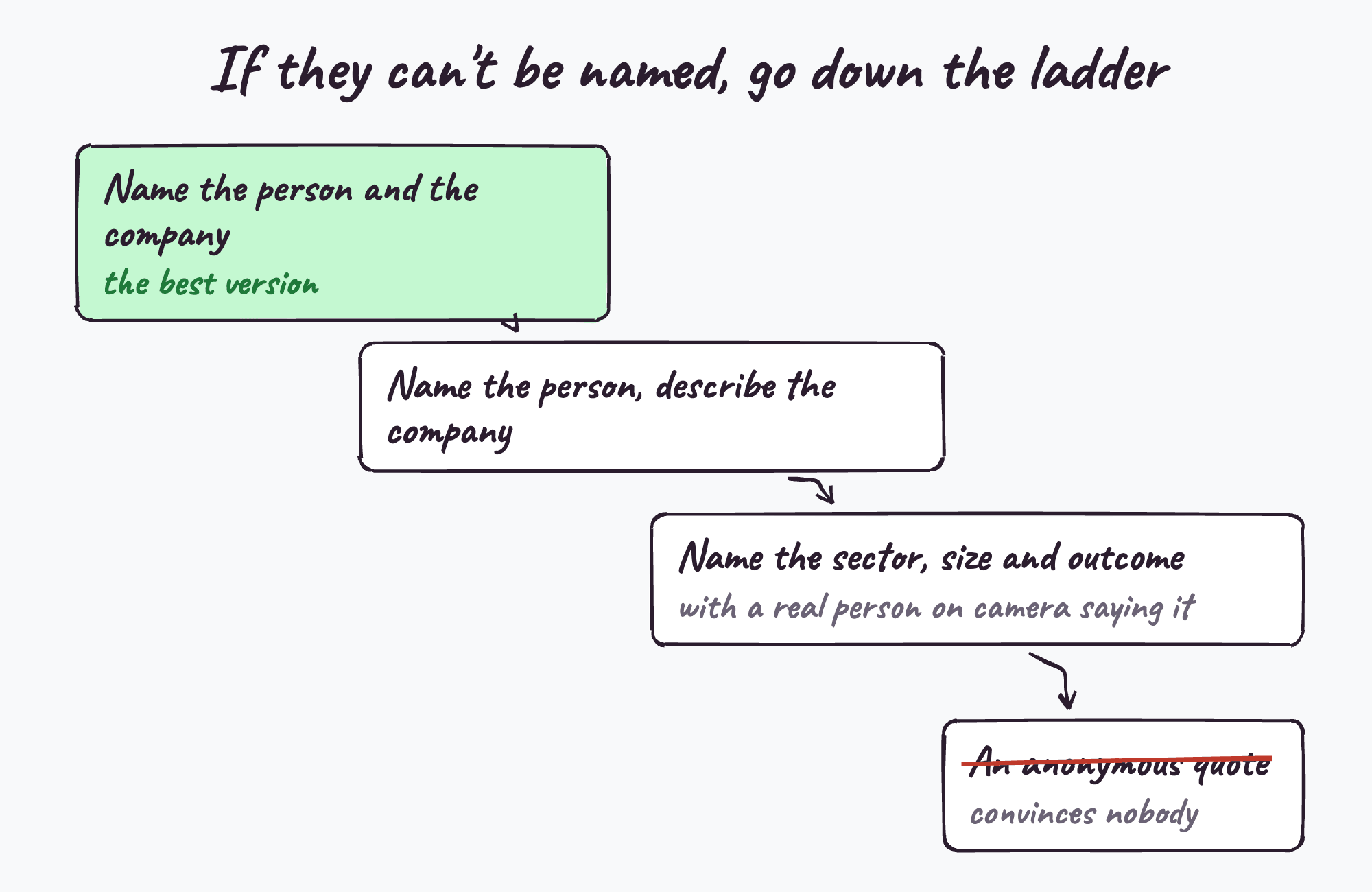
First, can we name the person and the company? If not, can we name the person and describe the company? If not, can we name the sector, the size and the outcome, with a real person on camera saying it? That third version still beats an anonymous line of text, because a real person describing a real result is evidence whether or not their employer is named.
Reason 5: The timing was wrong
They were in the middle of a busy month, or onboarding staff, or you asked the week after something went wrong.
The fix is to ask at the right moment, and to treat "not now" as "not now". The best time to ask is straight after something went well: a tricky ticket resolved, a project delivered, a quarterly review where you've just shown them the numbers. And when someone says it's a bad time, believe them, ask whether you can come back in a couple of months, and put a reminder in your diary so you actually do.
Reason 6: The wrong person asked
An account manager who has just renewed the contract is not the ideal person to ask for an endorsement, because the request lands as part of the commercial relationship. Nor is a generic marketing email from an address the client has never heard of.
The fix is a warm introduction followed by somebody neutral. You, or whoever has the best relationship with that client, sends two lines introducing the idea. Then a third party does the asking, the scheduling and the chasing, which takes the social awkwardness out of it for both sides. That's how we work: you make the introduction, and I take it from there.
Reason 7: They aren't actually that happy
Occasionally a no is exactly what it sounds like. The client isn't unhappy enough to leave, but they're not happy enough to put their face to it either.
Don't try to fix this one with a better email. Take it as a free piece of account intelligence and find out what's going on, because a client who won't recommend you is a client who might be listening to a competitor. It's also why it's worth getting a sense of how someone feels before you ask, rather than walking into a request and finding out during it.
Should you offer an incentive?
Thank people, by all means, but don't pay for the words. A gift sent afterwards, unconditionally, for giving up their time is good manners. A discount or voucher offered in exchange for a public review breaks Google's rules and can get reviews removed, and even for a testimonial you host yourself, a buyer who suspects it was paid for discounts it.
What does work is making sure your client gets something out of it. In our packs the customer gets a short piece about their own outcome for their website and a LinkedIn post in their own voice to share the film, and a case study that links to their site.
When should you take no for an answer?
After one friendly follow-up. If someone hasn't replied to a request and a single nudge, park it and try someone else, or come back to them after something good happens. Keep chasing beyond that and you're spending goodwill you'll want for something more important, like the renewal.
Questions people ask
How do you ask a client for a testimonial without it being awkward?
Ask straight after something has gone well, describe exactly what's involved and how long it takes, lead with something positive they've already said to you, and let a neutral third party handle the scheduling and follow-up.
Can a client approve their testimonial before it's published?
Yes, and they should. In our process your client approves their own story after you've approved it, and nothing is published until both of you have signed it off.
What if a client agrees and then goes quiet?
Send one follow-up that changes the shape of the ask, for example sharing the questions or suggesting a specific time, and if that doesn't land, park it for a couple of months.
Is it better to ask for a video or a written testimonial?
Ask for the conversation. A recorded interview gives you the video and every written piece from the same 45 minutes, and if a client won't go on camera, a written quote is a good start rather than a failure.
Related reading
- Five ways to get testimonials from your clients
- How a remote video testimonial works
- Testimonial interview questions for MSPs
Make the introduction and we'll do the asking, the scheduling and the chasing. Your client gets a relaxed conversation and a story they're proud to share.
See how it worksJames interviews MSP and tech vendor customers for a living and runs MSP Testimonials, the interview-led testimonial service. If a customer of yours has a story worth telling, this is how it gets told.