You've recorded a call with a happy customer. What do you do with it now?
Every way to reuse one recorded customer conversation, in marketing and in sales, and the order to do it in so it lasts a quarter
 8 min read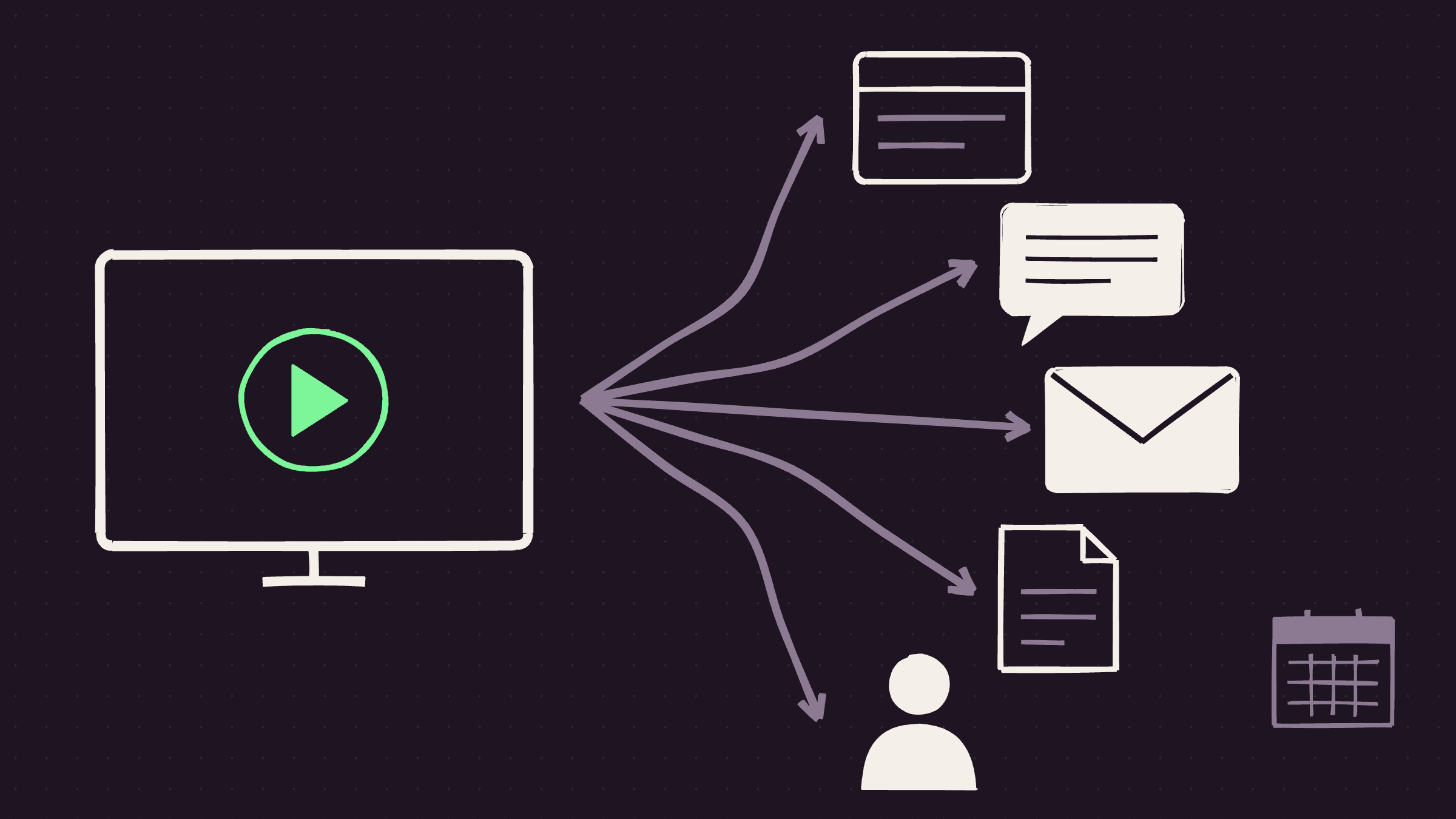
To repurpose a recorded customer call, get a transcript, mark the five or six best moments, and cut from those: a written case study, one longer video, a few short clips and some quote graphics. Marketing puts them on the website, in posts and in emails over about three months. Sales uses the same pieces one at a time, matched to where each deal has got to, and that's where most of the value ends up.
I wrote recently about getting a happy customer onto a recorded call in the first place. This is the second half: the call has happened, it went well, and there's a video file sitting in a folder. In my experience that folder is where most of them stay. Somebody posts the whole recording once, or means to edit it when things quieten down, and things don't quieten down.
So here is everything that recording can become and where each piece goes. It's written for any business with customers, whatever you sell. You won't do all of it, and you don't need to.
What should you do before you cut anything?
Three things, and they take an hour.
Get a transcript. Most recording tools produce one, and it only needs to be good enough to search. You'll find moments in text far faster than by scrubbing through video.
Mark the moments. Read it through once and highlight wherever your customer describes something specific: the day it went wrong, what they were worried about before they bought, a number, the moment they knew it had worked, what they'd say to somebody like them. Five or six is plenty. Everything below gets cut from those.
Check what they're happy with. Send your customer the moments you plan to use and get a yes in writing before anything is published. People are more relaxed about this than you'd expect, and the few minutes it takes protects a relationship that is worth far more than the content.
What can one recorded call become?
- A written case study of about six hundred words, telling the story in order with their real quotes in it.
- One longer video of two to four minutes that tells the whole story.
- Three to five short clips of under a minute, each making a single point.
- Four to six quote graphics with their words, their name and their face.
- A bank of quotes in a document, sorted by what each one proves, which is the piece your sales team will use most.
Whatever you make, use their words as they said them. Trim, but don't join sentences from different parts of the call into one quote, and don't polish their phrasing. A real sentence with a slightly odd rhythm is more believable than a smooth one, and their name is on it.
Where does it go on your website?
The instinct is to build a testimonials page, and few visitors go looking for one. Put the story where people are deciding.
The clip or quote about a particular service goes on the page for that service. The line about what they were worried about before buying goes next to your contact form or your prices, because that's where a visitor is having the same worry. The best single quote goes on the homepage, with the customer's name, role and company, since a quote from "Sarah, Manchester" persuades nobody.
Then give the full story a page of its own: the longer video at the top, the written case study under it, and the transcript at the bottom. The text matters more than it used to. AI tools like ChatGPT answer from written pages far more than from video, so the written version is the one that gets you found. I've gone into that in do testimonials help you get found in AI search?
How do you turn it into social posts?
One story gives you eight to ten posts without repeating yourself: the longer video, each short clip, each quote graphic, and a written post telling the story in your own words.
The thing that separates the posts people read from the ones they scroll past is who the post is about. "Another happy customer" is about you. "If you're putting off replacing something because it still sort of works, this is what that cost somebody" is about the reader, with your customer as the evidence. Write every post for the person who has the problem your customer used to have.
Space them out. One or two a week over three months will reach far more of your audience than ten posts in a fortnight, because most of your followers see only a fraction of what you publish. Tag your customer when you post the main video, and hand them a draft post of their own so sharing it takes them thirty seconds.
If you're thinking about putting money behind it, I've written up what the evidence says about customer stories in LinkedIn ads.
Where does it go in email?
Send the story to your list once as the main item, written as a story and not as an announcement. After that it earns its keep in small places. A short quote works in your email signature, and the welcome emails new enquiries receive are a good home for the longer video. The follow-up you send after a first meeting is better still, because the person reading it has just been wondering whether you're as good as you said.
How does sales use it?
This is the part most businesses skip, and it's where a customer story pays for itself. Marketing uses a story once. Somebody selling can use it every week.
The rule is one piece at a time, matched to how warm the conversation is.
In a first message to somebody who doesn't know you, mention the customer in a sentence and attach nothing. "We recently helped a charity that had been running on the same server for about ten years" does more than a link they won't click.
Once they've replied, send the longer video or the case study.
When a deal goes quiet, work out what they're nervous about and send the one short clip where your customer talks about having had the same worry. This is the most useful single thing the recording will give you.
In a proposal, use a quote from the customer most like the one you're writing to, next to the price.
It also helps to learn the story well enough to tell it in thirty seconds without notes, because a story told across a table beats one that has been forwarded. There's more on this in how sales teams use a testimonial every week.
What about the customers you already have?
People forget this one. A story about a customer who started with one service and later added another is the easiest way to raise that second service with everybody else who only buys the first. Bring it to a review meeting, or send it with a line saying it made you think of them. It's far more comfortable than a sales pitch, for both of you.
The same recording is useful inside your business too. New starters who watch a customer describe what it was like before and after understand what you do faster than any induction slide will manage.
How do you make it a campaign and not a one-off?
Give it a shape and a calendar. Month one is the launch: the story goes on your website, the longer video goes out with your customer tagged, and your list gets the email. Month two is the clips, one a fortnight with quote graphics between them, each post written about the reader. Month three is sales: into proposals, into follow-ups, out to deals that have stalled, and over to your customer to share.
Then record the next one. Two or three stories a year, each run properly for a quarter, means you always have something real to say, and you stop staring at a blank post on a Monday morning.
When isn't this worth doing?
If the call stayed polite and general, with no particular day and no number and no doubt overcome, cutting it up won't rescue it. You'll have ten pieces that all say "they're great". It's usually better to go back and ask two or three follow-up questions than to push on with thin material.
And if you know you only have a day to spend, don't attempt the whole list. Do the written case study, two short clips and the quote bank for sales. That's most of the value for a fraction of the work.
Questions people ask
How many pieces of content can you get from one customer interview?
From a good 30-minute call, a written case study, one longer video, three to five short clips, four to six quote graphics, eight to ten posts and an email, plus the quotes your sales team borrows. A professionally produced interview goes further, but that list is realistic to do yourself.
How long can you keep using one testimonial?
As a campaign, about three months before your audience has seen enough of it. On your website and in sales conversations it stays useful for as long as it's still true, which is often years. Check in with the customer now and then, and take it down if they leave.
Should I post the full recording?
No. The full call has your questions, their thinking time and a good deal of small talk in it. Nobody outside your business will watch half an hour. Cut the longer video down to the two to four minutes that tell the story.
Do I need an editor?
For the short clips, a simple tool that lets you trim and add captions is enough, and captions matter because plenty of people watch with the sound off. The longer video is harder to do well, since it means choosing what to leave out. If you pay for help with one thing, make it that.
Related reading
- Your five-minute guide to turning a testimonial into months of content
- How to use a customer story in your own deals
- Where to put testimonials on your MSP website
If all of that sounds like more days than you have, this is what we do for IT companies and technology vendors. I write the questions and run the interview, I choose the moments and write the edit notes, a human editor cuts the film, and people review it before you see it. None of that is automated. One conversation with your customer, and the films, case study, graphics, posts and sales pieces back 14 working days later.
See how it worksJames interviews MSP and tech vendor customers for a living and runs MSP Testimonials, the interview-led testimonial service. If a customer of yours has a story worth telling, this is how it gets told.