Can you use AI to make customer testimonials?
Where the line is between using AI to help make a real testimonial and using it to fake one, what the rules in the US, UK and EU say, and why it matters for trust
 5 min read
You can use AI to help make a real customer testimonial, for transcribing the interview, finding the best moments, editing, captioning and drafting written versions, as long as the customer is real, the words are theirs and they approve the result. Using AI to invent a customer, write words they never said or create an avatar of them is a fake testimonial, and US, UK and EU rules all now address it.
Every few weeks another tool promises to turn a photo into a customer testimonial, or to generate a "customer story" from a few notes. I understand the appeal. Getting a real customer on camera takes asking, scheduling and an interview, and a generated one takes a minute.
It's also the fastest way to destroy the one thing a testimonial exists to provide, which is a real buyer's reason to believe you. And regulators have started saying so in plain terms.
Where is the line?
The test is simple: is a real person saying something they actually said, about an experience they actually had?
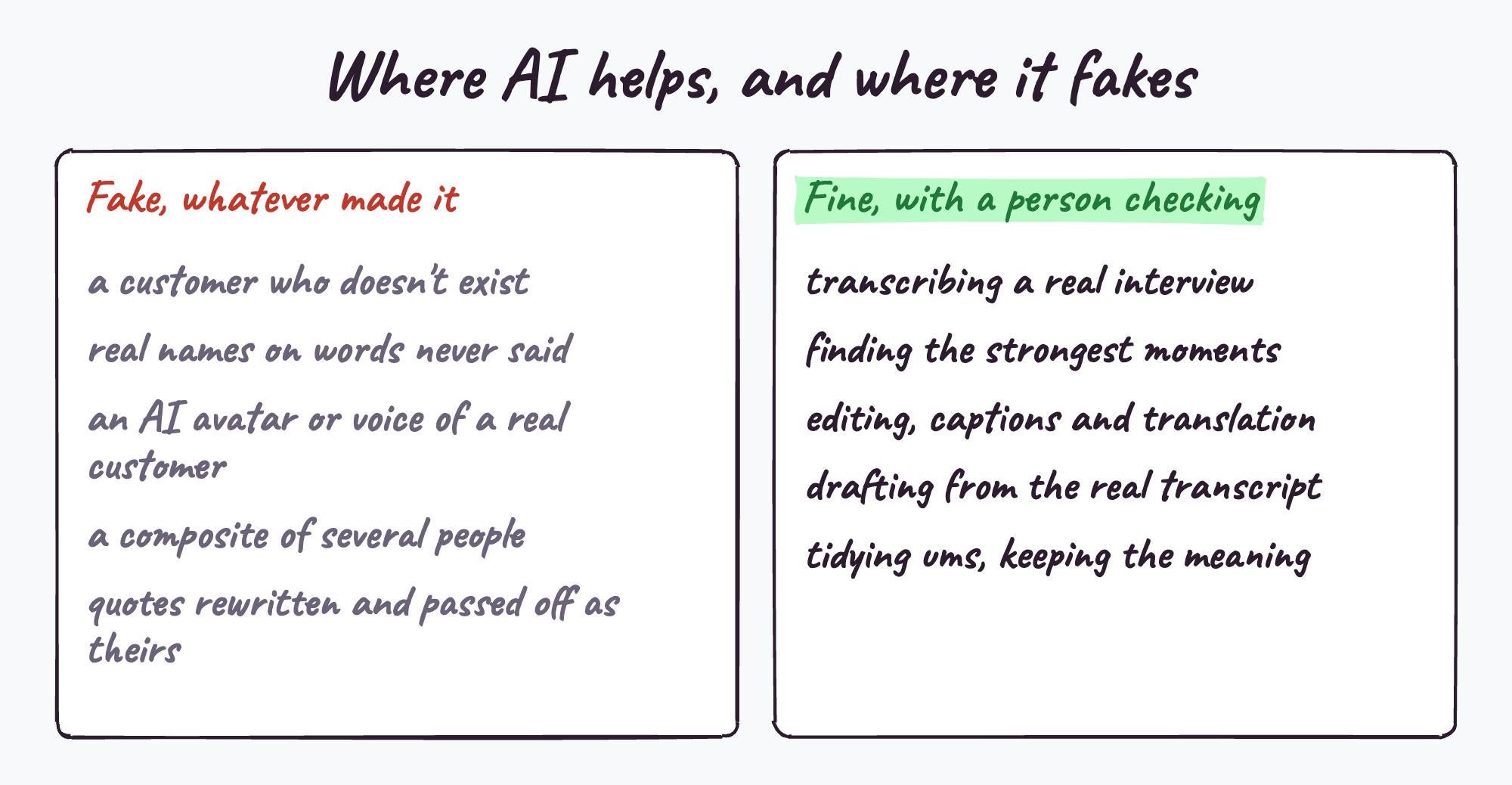
Fake, whatever tool made it:
- A customer who doesn't exist, or a stock face presented as one.
- A real customer's name attached to words they didn't say.
- An AI avatar or voice clone of a real customer delivering lines.
- A "composite" customer stitched together from several people.
- Real quotes rewritten into something smoother and presented as their words.
Fine, with a person checking the result:
- Transcribing a real interview.
- Helping find the strongest moments in a long recording.
- Editing, captioning and translating captions.
- Drafting a written case study or post from the real transcript, with every quote kept word for word.
- Tidying "um"s and false starts, without changing what was said.
What do the rules say?
This isn't legal advice, and these rules are mostly written with consumers in mind, so check how they apply to your business with your own adviser. But the direction is consistent.
In the US, the Federal Trade Commission's final rule on fake reviews and testimonials took effect on 21 October 2024. Announcing it, the FTC said the rule addresses testimonials that misrepresent that they're by someone who doesn't exist, "such as AI-generated fake reviews", or by someone who didn't have actual experience of the business.
In the UK, the Digital Markets, Competition and Consumers Act 2024 banned submitting or commissioning fake consumer reviews from 6 April 2025. A fake review is one that claims to be based on a person's genuine experience but isn't, and the Act says "writing" includes creating by any means, which plainly covers generating one.
In the EU, the AI Act's transparency rules apply from 2 August 2026. Anyone deploying AI to create a deepfake, content that makes a real person appear to say or do something they didn't, has to disclose that it was artificially generated. An AI avatar of a customer falls squarely into that.
Even if it were legal, it wouldn't work
A testimonial persuades because a buyer believes a real peer took the risk and is glad they did. The moment a buyer suspects the person isn't real, or the words aren't theirs, the testimonial becomes evidence against you, and so does everything else on the page.
B2B buyers check, too. They look people up on LinkedIn, they ask around, and in the MSP world, where plenty of people know each other, a made-up customer or an invented quote doesn't stay hidden for long.
There's also the customer to think about. A real customer who finds a smoothed-over version of their words in your marketing, saying something they didn't say, is a customer you've given a reason to feel used.
Where AI genuinely helps
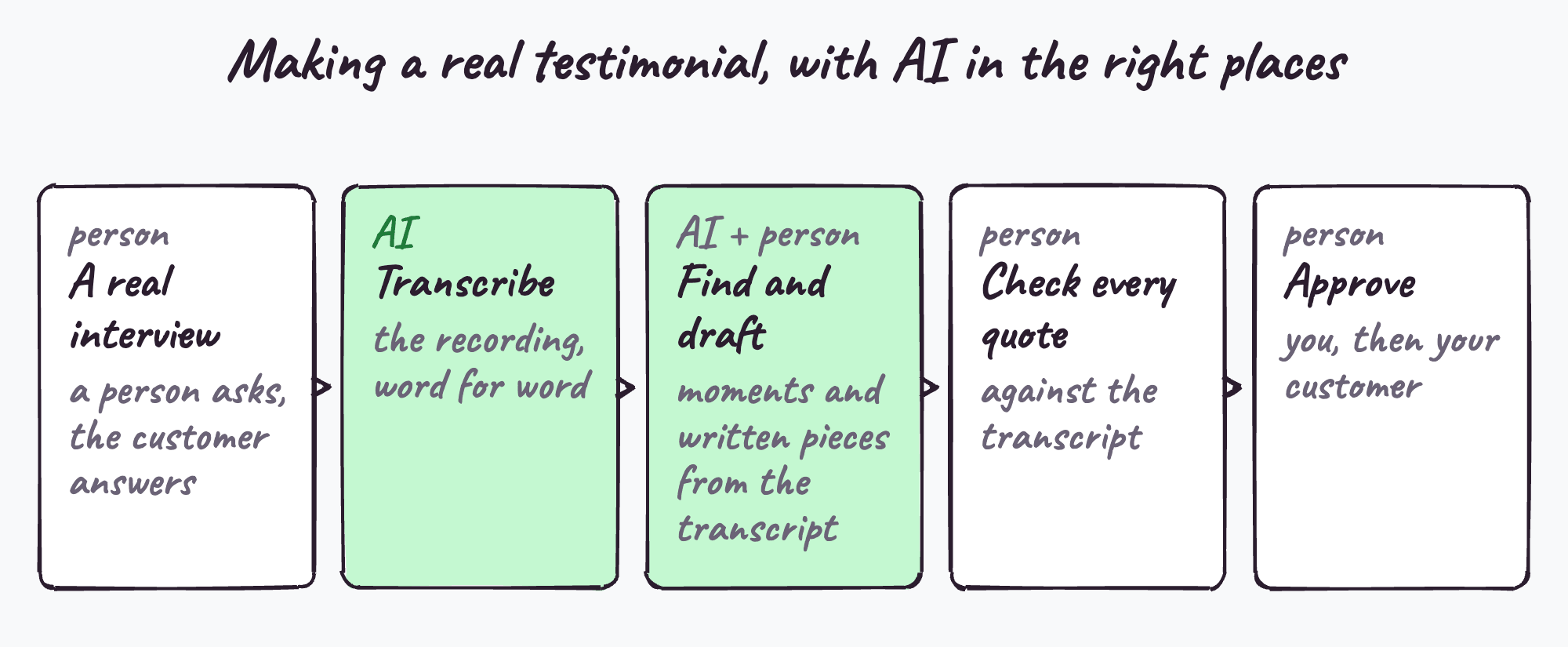
Used honestly, AI takes a lot of the slow, mechanical work out of making a real testimonial, which frees up time for the parts that matter: asking the right follow-up question in the interview, and choosing which moments tell the story.
How we use it: every video is a real customer in a real interview, and making the film is entirely manual. I write the questions and run the interview, I choose the moments and write the edit notes, a human editor cuts the film, and people review it. None of that is automated. Where software does help is with the mechanical work afterwards: transcribing the recording, organising it and drafting the written pieces from it. Every quote in every piece is checked against the transcript word for word before anything ships, a person reviews all of it, and nothing is published until you and your customer have approved it.
Questions people ask
Are AI-generated testimonials legal?
Testimonials that present a person who doesn't exist, or words or experiences that aren't real, are treated as fake by US and UK rules on reviews and testimonials, and AI-generated deepfakes of real people need disclosing under the EU AI Act. Check how the rules apply to your business with an adviser.
Can I use AI to write a testimonial for a customer to approve?
Writing words for a customer and asking them to sign it off turns their testimonial into your copy, and buyers can usually tell. It's far better to interview them and use their own words.
Is it okay to use AI to edit a video testimonial?
Yes, as long as the edit doesn't change what the customer said or meant. Transcription, captions, finding the best moments and trimming pauses are all fine.
Can AI create an avatar of a real customer for a testimonial?
It would present the customer saying things on camera they didn't say in that way, which is a deepfake. Don't do it, and under the EU AI Act, AI-generated deepfakes must be disclosed.
Related reading
- What makes a good video testimonial?
- Questions to ask before you hire a testimonial company
- Who owns a testimonial, and what happens if the customer leaves?
Real customers, real interviews, every quote word for word. We'll do the asking so you don't have to be tempted.
See how it worksJames interviews MSP and tech vendor customers for a living and runs MSP Testimonials, the interview-led testimonial service. If a customer of yours has a story worth telling, this is how it gets told.